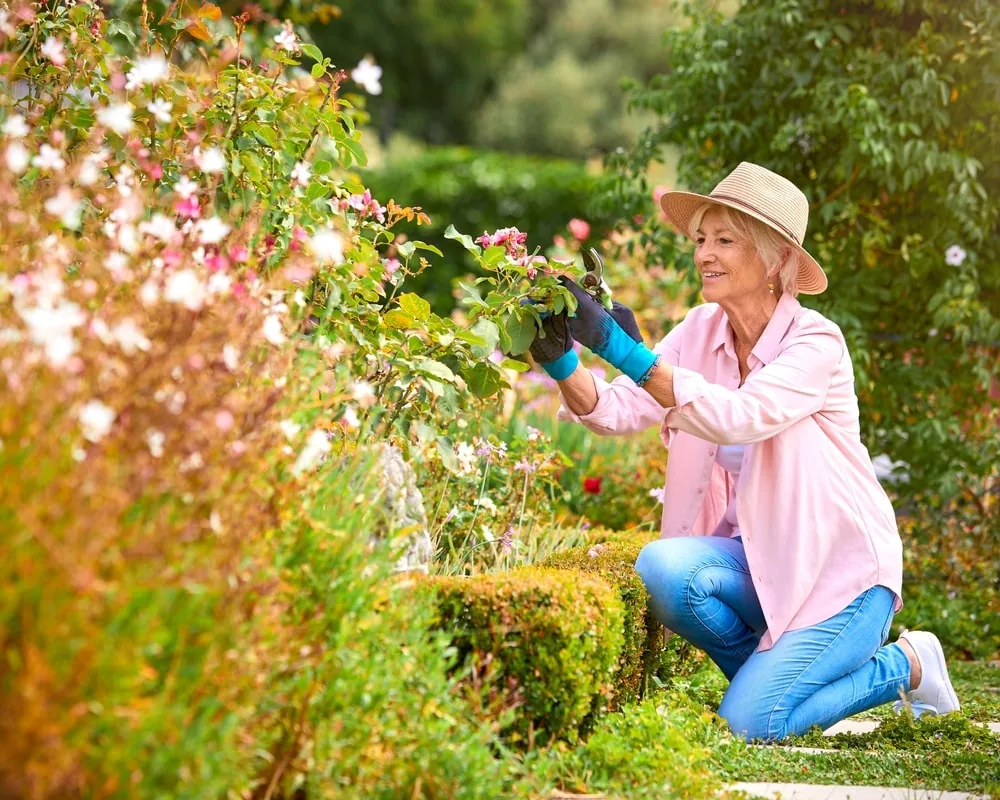
Gardening remains a fulfilling and healthy pastime even in later life. With back-friendly aids such as raised beds, ergonomic tools and automatic watering systems, older people can continue to tend to their green oasis. Choosing low-maintenance plants, designing age-appropriate garden paths and scheduling regular breaks make it possible to retain the joy of gardening. Modern gardening tools and well-thought-out adaptations transform the garden into a place that promotes exercise, a connection with nature and quality of life, even as strength wanes.
Key Takeaways
- Why gardening remains valuable in old age
- Raised beds as a back-friendly solution
- Low-maintenance plants for less effort
- Ergonomic gardening tools make the work easier
- Smart watering systems save energy
- Designing accessible garden paths
Why gardening remains valuable in old age
For many people, their own garden means far more than just a patch of green space. It is a place of retreat, an open-air hobby room and often the result of decades of loving care. However, as we get older, new challenges arise: bending down becomes harder, strength wanes and some tasks that used to be effortless become a burden. Nevertheless, no one needs to give up the joy of gardening. With the right adjustments and aids, the garden can be adapted to suit older people, ensuring it remains a source of exercise, fresh air and contentment.
Gardening has been proven to have a positive effect on both body and mind. Moderate exercise in the fresh air strengthens the cardiovascular system, working with soil and plants reduces stress, and watching your own plants grow gives a sense of purpose and fulfilment. Studies also show that regular gardening can boost cognitive abilities and help counteract age-related mental decline. These benefits clearly demonstrate why it is worthwhile to continue actively using the garden in later life and to adapt it accordingly.
Raised beds as a back-friendly solution
Raised beds have established themselves as one of the most important innovations for age-appropriate gardening. They allow vegetables, herbs and flowers to be grown at a comfortable working height without having to bend down constantly. The ideal height for a raised bed for older people is between 80 and 100 centimetres, depending on body height. This height allows you to work comfortably whilst standing or sitting on a stool. Modern raised beds are available in various materials: wood provides a natural look and blends harmoniously into any garden, whilst metal or plastic versions are particularly durable and low-maintenance.
Another advantage of raised beds is the improved soil quality. As the soil is added by hand, it can be optimally tailored to the plants’ needs. The raised position also ensures better drainage and faster warming of the soil in spring, leading to an earlier start to the harvest. Snails and other pests find it harder to reach the plants, which reduces the amount of maintenance required. For people with limited mobility, raised beds can even be designed to be wheelchair-accessible, so that wheelchair users can garden without any problems.
Low-maintenance plants for less effort
Choosing the right plants plays a crucial role in age-appropriate gardening. Low-maintenance perennials such as lavender, stonecrop or lady’s mantle return year after year and require minimal care. They are resilient to fluctuations in the weather and will even forgive the occasional forgotten watering can. Ground cover plants such as cranesbill or Waldsteinia naturally suppress weeds, thereby significantly reducing the need for weeding. These plants form dense carpets that are not only low-maintenance but also visually appealing.
In the vegetable garden, hardy varieties that require little care are recommended. Courgettes, pumpkins and potatoes grow almost by themselves and produce a bountiful harvest. Herbs such as rosemary, thyme and sage are not only versatile in the kitchen but also extremely undemanding. They thrive on little water and require hardly any fertiliser. If you don’t want to miss out on a display of flowers, opt for perennial flowering plants such as coneflowers, asters or peonies. These perennials become more beautiful with each passing year and simply need a trim in autumn or spring.
Ergonomic gardening tools make the work easier
Modern gardening tools are specifically designed to meet the needs of older people. Telescopic handles make it possible to trim hedges or prune trees without having to use a ladder. Tools with ergonomically shaped handles fit better in the hand and reduce strain on joints and tendons. Lightweight materials such as aluminium or carbon significantly reduce the weight of the tools, which is particularly noticeable during longer periods of work.
Electric and battery-powered tools take a lot of the physical strain off you. A cordless lawnmower can be pushed effortlessly across the lawn, whilst robotic mowers can even take over lawn care entirely. Electric hedge trimmers and leaf vacuums significantly reduce the effort required. For smaller jobs, there are special reaching tongs that allow you to pick up weeds or fallen fruit without bending down. Kneeling stools with integrated handles make it easier to stand up after working close to the ground and can be turned over to serve as a small bench.
Clever watering systems save energy
Daily watering can be a real chore, especially in hot summers. Carrying heavy watering cans and fiddling with the garden hose for ages is tiring and time-consuming. Automatic watering systems provide a solution. Drip hoses supply water directly to beds and raised beds without any wastage. Installation is easier than you might think: the hoses are laid above ground and can be adjusted as needed.
Timers allow you to schedule watering for the early morning hours, when evaporation is at its lowest. Modern systems even feature moisture sensors that only water when the soil is actually dry. For potted plants and smaller areas, watering balls or cones are ideal, as they release water slowly and evenly. Rainwater barrels with an integrated tap at a suitable height make filling watering cans both back-friendly and sustainable.
Designing accessible garden paths
Safe and easily navigable paths are the backbone of an age-appropriate garden. Wide, level paths without trip hazards allow you to move around safely, even if your footing becomes less steady. A minimum width of 120 centimetres allows for comfortable manoeuvring with a wheelbarrow or walker. Non-slip materials such as natural stone slabs with a rough surface or special paving stones provide a secure grip even when wet.
Paths should be as straight as possible and avoid steep gradients. Where changes in level are unavoidable, gentle ramps or wide, flat steps with handrails are helpful. Good lighting along the paths increases safety in the evening. Solar lights along the paths are an energy-saving solution that requires no wiring. Benches at regular intervals invite you to take a break and allow you to tackle the gardening in manageable stages.
Making the lawn low-maintenance
A large lawn means regular mowing, which can become a chore as you get older. There are various ways to reduce the maintenance required without having to give up green spaces. Robotic mowers take care of lawn maintenance fully automatically and ensure a consistently well-kept lawn through frequent mowing. The fine clippings remain on the ground as natural fertiliser.
Alternatively, the lawn area can be reduced and replaced with low-maintenance alternatives. Wildflower meadows only need to be mowed once or twice a year and also provide valuable habitat for insects. Ground cover plants or gravel areas interspersed with perennials are further options for replacing lawns. Those who do not wish to do without a lawn should choose hardy varieties that can withstand even prolonged dry spells and require less frequent mowing.
Vegetables and herbs within easy reach
Growing your own vegetables and herbs is a particular joy and provides the kitchen with fresh ingredients. In an age-appropriate garden, these crops should be particularly easy to reach. As well as raised beds, planting tables, vertical gardens and large planters on castors are also suitable. Herb spirals accommodate various herbs in a small space and allow harvesting without bending down.
When selecting varieties, it is worth opting for compact-growing cultivars. Bush tomatoes do not require time-consuming staking, and leaf lettuces can be harvested over weeks without needing to be resown. Strawberries in hanging baskets or plant towers hang at a comfortable picking height. Perennial vegetables such as rhubarb or asparagus establish themselves once and then provide a harvest for years without the need for reseeding.
Weed control without backache
Weeding is one of the most unpopular and strenuous gardening tasks. However, with the right strategy, the effort involved can be significantly reduced. Mulching is one of the most effective methods: a thick layer of bark mulch, wood chips or straw suppresses weed growth whilst retaining moisture in the soil. Weed barrier fabric laid under gravel paths or in perennial beds prevents unwanted plants from breaking through.
For stubborn weeds in joints and on paths, there are thermal weed killers that use heat and do not require chemicals. Long-handled weed pullers allow you to remove dandelions and other deep-rooted weeds whilst standing. However, the best strategy remains prevention: densely planted beds leave weeds little room to grow, and regular shallow hoeing prevents weeds from becoming established.
Choosing the right fruit trees and shrubs
Fresh fruit from your own garden is a special treat. Dwarf fruit trees and columnar fruit trees are particularly suitable for an age-appropriate garden, as they require little space and their fruit can be reached without a ladder. Modern cultivars remain compact yet still bear fruit abundantly. Berry bushes such as currants, gooseberries or raspberries provide vitamin-rich fruit at a comfortable picking height.
When choosing varieties, look for hardy, disease-resistant ones that require little maintenance. Self-fertile varieties do not need a second tree for pollination. Pruning can be kept to a minimum for many modern fruit varieties. Espalier fruit trees trained against house walls or fences make optimal use of the available space and make both maintenance and harvesting easier.
Plan breaks and accept your limits
Gardening should be a joy, not an overwhelming task. Regular breaks are important to prevent exhaustion. Strategically placed seating in the garden invites you to take a breather and allows you to enjoy the fruits of your labour. A comfortable garden chair with armrests makes it easier to stand up.
It is important to respect your own physical limits and accept help when needed. Many tasks can be spread over several days rather than trying to do everything at once. Neighbourly help, garden maintenance services or support from family and friends are not signs of weakness, but enable you to enjoy your own garden for longer. Heavy work such as digging over in the spring or trimming hedges can be delegated, whilst the enjoyable activities such as sowing, harvesting and designing remain in your own hands.
Making the most of the social aspects of gardening
Gardening doesn’t have to be a solitary activity. Community gardens offer the chance to exchange ideas with like-minded people and support one another. Sharing plants, seeds and gardening tips enriches your own knowledge and fosters social connections. Gardening clubs often organise events and outings that provide fresh inspiration.
Social moments can also be created in your own garden. A beautifully designed seating area invites friends and family to linger. Harvesting and processing the garden’s produce together is not only more fun, but also spreads the work across several people. Children and grandchildren enjoy learning from the experience of their elders and often help enthusiastically with the gardening.
Technical aids in the modern garden
Digitalisation hasn’t stopped at the garden’s door and offers interesting opportunities for older people. Gardening apps help identify plants and provide care tips. Weather stations with wireless connectivity inform users of the best times to water or warn of frost. Smart garden systems monitor soil moisture and light conditions and provide care advice.
Robotic lawnmowers can be programmed and monitored via an app. Automatic greenhouse windows open automatically when temperatures get too high. These technical aids may seem complicated at first, but they are usually easy to use and take a lot of the work off your hands. Many manufacturers offer user guides and setup services tailored to older people.
Experiencing the seasons to the full
The garden offers special moments in every season. In spring, nature comes to life again; the first blossoms and tender greenery are a delight to the eye. Summer brings abundance and harvest, whilst autumn enchants with colourful foliage and ripe fruit. Even winter has its charm, when hoarfrost adorns the grass and birds visit the bird feeder.
Consciously noticing and enjoying these seasonal changes is an important aspect of gardening in later life. It is no longer about having the perfect garden, but about nurturing a connection with nature and observing the small wonders of growth and flourishing. A garden diary can help to capture special moments and document the garden’s development over the years.