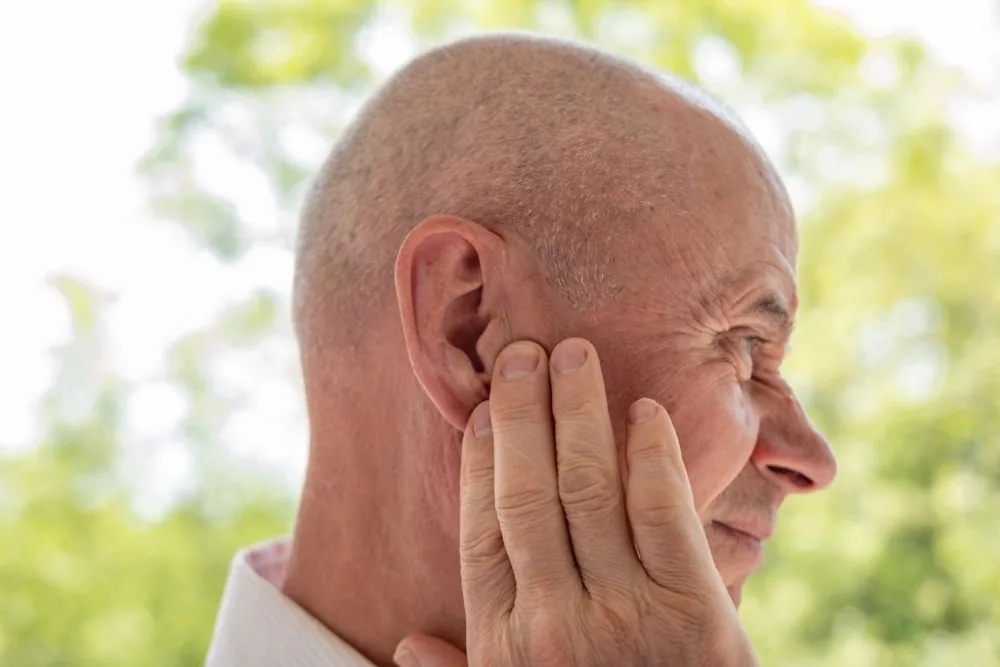
The link between hearing loss and mental health is becoming increasingly significant in research and medicine. Scientific studies suggest that untreated hearing loss in middle age may increase the risk of cognitive decline. Hearing serves a purpose far beyond simply perceiving sound: it connects people with their environment, enables social interaction and contributes to mental stimulation. When this auditory connection is weakened, it can have far-reaching effects on cognitive performance, emotional well-being and social participation.
Key Takeaways
- Untreated hearing loss can be considered a modifiable risk factor for cognitive decline and is cited in scientific reports as one of the potentially modifiable factors
- Cognitive overload caused by increased listening effort can tie up mental resources that might then be lacking for memory and thought processes
- Social withdrawal due to hearing loss can lead to isolation and loneliness, which in turn is considered a risk factor for various health problems
- People with untreated hearing loss may be at increased risk of depression and anxiety disorders
- Hearing aids can help break the vicious circle of poor hearing, stress and social withdrawal, and improve quality of life
- Early detection, regular hearing tests and preventive measures such as noise protection are important steps in maintaining hearing health
The fundamental importance of hearing for mental health
Hearing is a fundamental sensory function that goes far beyond the mere perception of sound waves. The sense of hearing enables connection with the environment, forms the basis for interpersonal communication and is crucial for social interaction. Good hearing can have a positive impact on daily life and mental well-being. Scientific research suggests that untreated hearing loss could negatively affect language development, quality of life and economic independence.
The ears constantly pick up acoustic information from the environment, which the brain processes, interprets and converts into meaningful information. This process usually takes place effortlessly and unconsciously. However, when hearing deteriorates, this automatic process is disrupted. The brain then has to work harder to interpret incomplete or unclear acoustic signals. This additional effort can have long-term effects on cognitive functions.
Hearing loss as a potentially modifiable risk factor
Scientific reports, including the Lancet Commission Reports on dementia, cite untreated hearing loss in middle age as one of the potentially modifiable risk factors for subsequent cognitive decline. This means that, unlike non-modifiable factors such as genetic makeup, there may be ways to influence hearing health. According to estimates, a significant proportion of cognitive impairments could potentially be prevented or delayed through improved hearing care.
This finding is of great significance as it highlights concrete opportunities for action. Whilst many risk factors for dementia and cognitive decline lie beyond individual control, active prevention is possible when it comes to hearing health. Regular hearing tests, the use of hearing protection in noisy environments, and the prompt provision of hearing aids once hearing loss has been diagnosed are concrete measures that can be taken.
The far-reaching consequences of untreated hearing loss
Untreated hearing loss affects various areas of life. Communication with family, friends and colleagues can become difficult. Professional challenges may arise if important information is not fully understood during meetings or conversations. Safety in everyday life can also be compromised if warning signals such as sirens, horns or shouts are not heard or are heard too late.
However, the psychosocial effects are particularly significant. People with untreated hearing loss often withdraw from social situations, as conversations are perceived as tiring and misunderstandings can lead to awkward situations. This social withdrawal, in turn, can lead to isolation and loneliness, which is considered a risk factor for various health problems. Age-related hearing loss usually develops gradually, which is why many affected individuals do not initially notice the changes or choose to ignore them.
Mechanisms of cognitive influence
The links between hearing loss and cognitive changes are complex and are the subject of intensive scientific research. Several mechanisms may play a role here, acting either individually or in combination. Understanding these mechanisms is important for grasping the significance of hearing health for cognitive performance.
Cognitive overload due to increased listening effort
When hearing declines, the brain must expend greater cognitive resources to listen and decipher speech. This process is referred to in research as cognitive overload. The increased auditory effort ties up mental capacity that may then be lacking for memory and other thought processes. The brain must constantly fill in gaps in auditory information, guess at connections and interpret ambiguous signals.
This constant extra work can lead to mental exhaustion. Many people with hearing loss report feeling particularly tired and drained after lengthy conversations or social events. This fatigue is not only physical but, above all, mental in nature. The feeling of being mentally exhausted after conversations can be an early warning sign of increased listening effort and should be taken seriously.
Reduced mental stimulation and processing
Hearing loss can lead to reduced mental stimulation, as fewer auditory stimuli reach and are processed by the brain. The brain is an organ that relies on continuous stimulation to maintain its functionality. If less auditory information is processed over a prolonged period, this could lead to structural and functional changes in the brain.
Scientific studies using imaging techniques have shown that in people with hearing loss, certain regions of the brain, particularly those responsible for auditory processing, may be less active. A decline in neural connections could occur if the brain is not sufficiently exercised due to hearing loss. This affects not only the auditory cortex but can also influence other areas of the brain associated with memory and cognitive functions.
Possible shared underlying factors
One aspect discussed in research is the possibility of shared underlying factors that could influence both hearing loss and cognitive changes. This suggests that hearing loss need not be the sole cause of cognitive problems, but could potentially be a symptom occurring in parallel with deeper-seated processes. Factors such as vascular changes, inflammatory processes or age-related degeneration could affect both hearing and the brain.
This finding highlights the complexity of the relationships and demonstrates the importance of a holistic approach to health. Risk factors such as high blood pressure, diabetes, high cholesterol or smoking can have a negative impact on both blood flow to the inner ear and cerebral blood flow. A healthy lifestyle with a balanced diet, regular exercise and avoidance of risk factors can therefore benefit both hearing and brain health.
Cognitive overload due to increased listening effort
When hearing declines, the brain has to expend more cognitive resources to listen and decipher speech.
Reduced mental stimulation and processing
Hearing loss can lead to reduced mental stimulation, as fewer acoustic stimuli reach and are processed by the brain.
Possible shared underlying factors
One aspect discussed in research is the possibility of shared underlying factors that influence both hearing loss and cognitive...
Psychosocial and emotional effects
The psychosocial consequences of hearing loss are often underestimated, but can have a significant impact on quality of life. Communication difficulties are not limited to hearing perception alone, but affect the overall social life and emotional well-being of those affected.
Social withdrawal and isolation
Impaired hearing, particularly the difficulty in following conversations in noisy environments, often leads those affected to avoid social contact. Restaurants, family gatherings, events or meetings with friends are perceived as exhausting. The fear of misunderstanding something, being unable to respond appropriately or having to constantly ask for repetition causes many people with hearing loss to avoid such situations.
This gradual withdrawal can lead to social isolation and loneliness. Social interactions become less frequent, relationships may deteriorate, and the sense of belonging fades. Loneliness and social isolation are recognised risk factors for various health problems, including cognitive impairment. A vicious circle can develop: hearing loss leads to social withdrawal, which in turn leads to less mental stimulation and emotional problems, further reducing the motivation for social interaction.
Increased risk of depression and anxiety disorders
Untreated hearing loss may be associated with an increased risk of depression. Scientific research suggests that people with hearing loss may be more susceptible to symptoms of depression than those with normal hearing. The constant effort required to follow conversations and the frustration caused by repeated misunderstandings can lead to chronic stress. Participating in social life is increasingly perceived as a burden rather than an enrichment.
Anxiety disorders may also occur more frequently. Particularly in noisy situations, during important conversations or in new environments, the uncertainty about whether everything is being understood correctly can lead to significant anxiety. This anxiety can become so overwhelming that those affected avoid such situations entirely, which further exacerbates social isolation. The link between hearing loss and mental health is complex and deserves greater attention.
Negative self-perception and stigmatisation
Those affected may develop the feeling that they are a burden on those around them. Repeatedly asking people to repeat themselves, the need for others to speak louder or more clearly, and frequent misunderstandings can lead to feelings of shame. Self-confidence suffers, and many people with hearing loss report feelings of inadequacy or inferiority.
To make matters worse, people with hearing loss are sometimes perceived by others as inattentive, disinterested or even arrogant if they do not respond appropriately when spoken to. In some cases, cognitive problems are suspected which do not actually exist, but are merely a consequence of poor hearing. These misjudgements by those around them can further increase the emotional strain and lead to further withdrawal.
The central role of hearing aids and intervention
Given the far-reaching effects of hearing loss on mental and psychological health, early intervention is of particular importance. Hearing aids and other supportive measures can help to mitigate the negative consequences and improve quality of life.
Early detection as the key to prevention
Hearing loss usually develops gradually over years or decades. Many people affected do not notice the changes at first or play them down. It is often family and friends who first notice the hearing loss. Typical warning signs include turning up the volume on media, frequently asking people to repeat themselves, difficulties with telephone conversations, or straining during conversations in noisy environments.
Regular hearing tests are recommended as soon as the first signs appear, or as a preventive measure from a certain age onwards. A hearing test is painless, does not take long and can detect changes at an early stage. The earlier hearing loss is detected, the sooner appropriate measures can be taken. Early intervention may help to reduce the negative consequences for cognitive and emotional health described above.
Positive effects of hearing aids
The early use of suitable hearing aids can not only improve hearing ability but may also have positive effects on cognitive performance. Hearing aids can help break the vicious circle of poor hearing, increased listening effort and social withdrawal. Improved hearing facilitates communication, social interactions can once again be perceived as enriching, and mental stimulation through auditory stimuli is restored.
Users of hearing aids often report improvements in their physical, emotional, mental and social well-being. They tend to be more socially active, participate more in events again and feel less isolated overall. Mood can improve, and anxiety and depressive symptoms can decrease. Family members also benefit, as communication becomes easier again and tensions are reduced.
Training for the ears and the brain
In addition to using hearing aids, active listening training can help improve speech comprehension and stimulate the brain. Active listening, even if it is tiring at first, helps to train auditory processing. Special listening training apps and programmes can specifically promote speech comprehension in various situations.
Listening actively to music, learning a new language or having regular conversations also trains both the ears and the brain. These activities contribute to mental stimulation and can strengthen cognitive reserve. It is important that the activities are perceived as enjoyable and not as an additional burden. The joy of hearing and communication should be the main focus.
Practical management and everyday strategies
Dealing with hearing loss in everyday life requires adjustments and strategies that can facilitate communication and maintain quality of life. Both those affected and their social circle can help improve the situation by adapting their behaviour.
Acceptance and open communication
An important first step is recognising and accepting the hearing loss. Many people hesitate to admit to or talk about their hearing problems out of fear or shame. However, this denial can lead to valuable time being lost and the negative consequences becoming more severe. Open communication about one’s own hearing problems can help to avoid misunderstandings and foster understanding within one’s social circle.
Those affected can let those around them know how they would prefer to be addressed. Simple rules such as maintaining eye contact when speaking, speaking clearly without exaggeration, avoiding background noise, or speaking at a suitable volume can make communication considerably easier. Those around them also benefit from this openness, as it reduces uncertainty and makes interactions more relaxed.
Technical aids in everyday life
In addition to hearing aids, there are numerous other technical aids that can make everyday life easier. Light signals or vibrating alarms can alert users to doorbells, telephones or alarm clocks. Special transmission systems can transmit TV sound or music directly to hearing aids without the need to turn up the volume on the television. Subtitles on television provide additional visual support.
Induction loops are often installed in event venues, theatres or churches, enabling direct wireless transmission to compatible hearing aids. Using these systems can significantly improve the listening experience. In the workplace too, special conference systems or FM systems can make it easier to participate in meetings. There is a wide variety of aids for the hard of hearing, offering support for many everyday situations.
Alternative communication methods
Lip-reading can be a valuable complementary skill for improving speech comprehension. Many people with hearing loss unconsciously use visual cues to better understand what is being said. Courses on the systematic learning of lip-reading can further improve this skill. Sign language also offers a fully-fledged alternative form of communication for people with more severe hearing loss.
In written situations, modern technologies can help. Speech-to-text apps can convert spoken words into written text in real time, which can be helpful during phone calls or meetings. Video calls offer the advantage that visual cues such as lip movements and facial expressions are visible, which makes understanding easier. Emails and text messages are also preferred means of communication for many people with hearing loss, as they do not require an auditory component.
Support from the community and self-help
Sharing experiences with others in a similar situation can be a valuable source of support and understanding. Self-help groups and organisations for people with hearing loss provide spaces where problems can be discussed openly without the fear of not being understood.
The value of sharing experiences
In self-help groups, people come together who have had similar experiences and who understand the emotional and practical challenges of hearing loss. This exchange can help people feel less alone and realise that their own problems are not unusual. Practical tips for everyday life, recommendations for hearing care professionals, or information about new technologies are shared.
Self-help organisations often also provide information materials, events and advice. They advocate for the rights of people with hearing loss and work to raise awareness within society. Taking part in such groups can boost self-confidence and help people actively manage their hearing loss rather than trying to ignore it.
Support for relatives
Relatives of people with hearing loss sometimes need support too. Communicating with a family member who is hard of hearing can be frustrating, and misunderstandings can lead to tension. Information about hearing loss and its effects can help foster understanding and provide a better perspective on the situation.
Relatives can learn how to facilitate communication, what technical aids are available, and how to support their hard-of-hearing partner, parent or friend without coming across as patronising. Talking to other relatives in similar situations can also provide relief and open up new perspectives.
Preventive measures and a healthy lifestyle
Whilst some forms of hearing loss cannot be prevented, there are numerous measures that can reduce the risk and help maintain hearing health. Prevention plays an important role, particularly in the case of noise-induced hearing loss.
Protection against noise
Noise is considered one of the most common preventable causes of hearing loss. Both occupational noise exposure and recreational noise can damage hearing. When working with construction machinery, industrial equipment or in noisy environments, wearing hearing protection is essential. Care should also be taken to ensure appropriate volume levels at concerts, sporting events or when listening to music through headphones.
The World Health Organisation has published guidelines on safe volume levels and is calling for stricter legal regulations, particularly to protect young people from excessively loud music. Modern smartphones often offer features to monitor volume and warn users if it is too high for prolonged periods. These warnings should be taken seriously, as noise-induced hearing loss is irreversible.
A healthy lifestyle for hearing health
Other modifiable factors can also influence the development of hearing loss. Nicotine consumption can impair blood flow to the inner ear and increase the risk of hearing loss. Diabetes, high cholesterol levels and high blood pressure can also have a negative impact on hearing health. A healthy lifestyle with a balanced diet, regular exercise, avoiding nicotine and moderate alcohol consumption can benefit both general health and hearing health in particular.
Some studies suggest that certain nutrients, such as omega-3 fatty acids, antioxidants or B vitamins, may have a protective effect on hearing. A balanced, nutrient-rich diet is certainly recommended. Regular exercise also promotes blood circulation throughout the body, including the inner ear, which could have a positive effect on hearing ability.
Caution with ototoxic medications
Certain medications can damage hearing as a side effect. These so-called ototoxic substances should only be taken under medical supervision and after careful consideration of the benefits and risks. These include some antibiotics, chemotherapeutic agents, or high doses of painkillers. When prescribing such medications, attention should be paid to possible hearing disorders as a side effect and, if necessary, hearing should be monitored during treatment.
The importance of regular check-ups
As with many aspects of health, regular check-ups can help with early detection when it comes to hearing. From a certain age or at the first signs of problems, hearing tests should become routine.
When and how often should hearing tests be carried out
For people with no known hearing problems or risk factors, it is often recommended to have a preventive hearing test every few years from the age of 50. In cases of occupational noise exposure, a family history of hearing loss or the first signs of hearing problems, tests should be carried out more frequently and, if necessary, earlier. Children should also have their hearing checked regularly as part of their routine health check-ups.
Hearing tests are carried out by ear, nose and throat specialists or hearing aid specialists. They are painless and usually do not take long. In addition to measuring the hearing threshold across different frequency ranges, speech comprehension can also be tested in various situations. The results provide information on the nature and extent of any potential hearing loss and form the basis for further action.
Dealing with a diagnosis of hearing loss
A diagnosis of hearing loss can initially be emotionally distressing. Many people associate hearing loss with old age or frailty and consequently feel stigmatised. However, it is important to view the diagnosis as an opportunity to take active steps to improve one’s own health and quality of life. In many cases, hearing loss is now easily treatable, and the available hearing aids are technologically advanced and often barely visible.
Open communication with the treating doctor or hearing care professional is important. All questions should be asked, and various options for hearing aids should be discussed. Seeking a second opinion is also perfectly legitimate. The better informed those affected are and the more they are involved in the decision-making process, the greater the likelihood that the chosen solution will be accepted and used consistently.
Outlook and future developments
Research into the links between hearing loss and mental health is constantly advancing. New findings could enable even more targeted prevention and intervention measures in the future.
Technological advances in hearing aids
Modern hearing aids are becoming increasingly powerful and user-friendly. Artificial intelligence enables automatic adaptation to different listening situations, and sound quality is constantly improving. Connectivity with smartphones and other devices significantly expands the range of applications. Future developments could lead to even smaller, more efficient and more intuitive devices, which may encourage even more people to use hearing aids.
Social awareness and destigmatisation
An important goal is the destigmatisation of hearing loss and hearing aids. The more normal it becomes to speak openly about hearing problems and to wear hearing aids, the more likely those affected will be to seek help. Awareness campaigns, public figures who are open about their hearing loss, and the inclusive design of public spaces can help to raise awareness and break down barriers.
Recognising the link between hearing and brain health can also help people understand that hearing loss is a serious health challenge that deserves early attention. The message that treating hearing loss not only improves quality of life but may also have preventive effects on cognitive health can motivate people to take action.