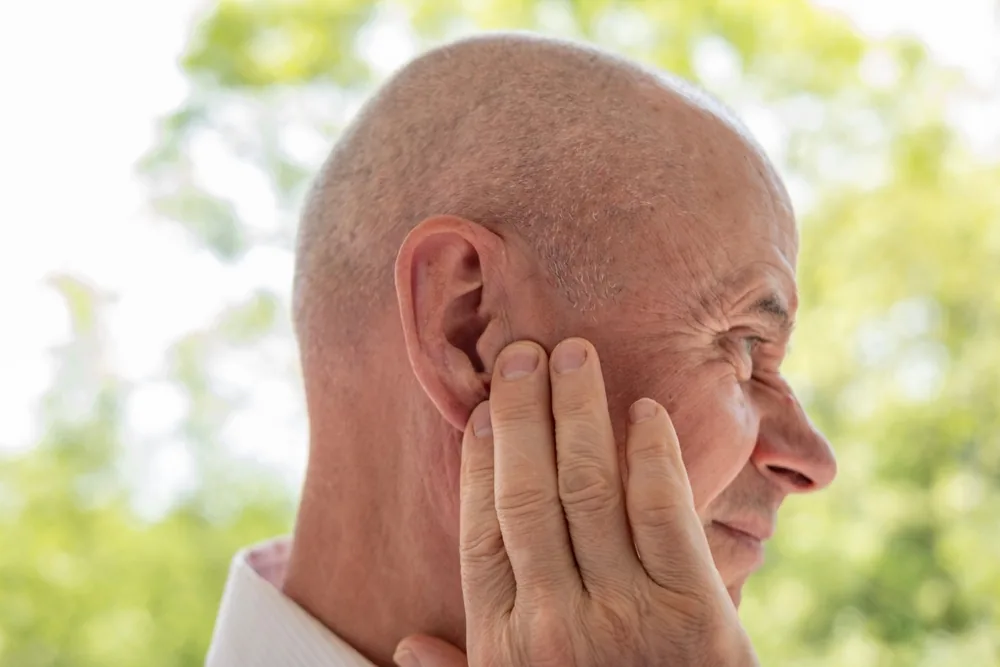
Hearing loss in older age is one of the most common sensory changes in later life. It often develops gradually and may go unnoticed at first because people adapt little by little. Conversations become more tiring, television volume rises and group situations feel more difficult, yet the change can still seem subtle for a long time. This age-related hearing loss is often described as presbycusis. It usually affects higher frequencies first and may reduce speech understanding before people feel that they are “hard of hearing” in a general sense. This article explains why hearing changes with age, which signs matter and what support options can help preserve participation and quality of life.
Key Takeaways
- Age-related hearing loss often develops gradually and affects higher frequencies first.
- Typical signs include difficulty understanding speech, especially in noisy surroundings.
- Diagnosis is based on hearing tests and medical assessment.
- Modern hearing aids and, in selected cases, implant solutions can offer meaningful support.
- Early action can help maintain communication, confidence and social participation.
Why Hearing Weakens with Age
Age-related hearing loss is largely connected to changes in the inner ear and auditory nerve. Over time, delicate sensory hair cells become less effective, especially in the regions responsible for higher frequencies. This makes consonants and bright speech elements harder to hear, even when the overall loudness of speech still seems present.
Other factors can contribute as well. A lifetime of noise exposure, certain illnesses, circulatory problems, medication effects and general health changes may all influence how strongly hearing changes with age. Ageing therefore provides the background, but the exact pattern is often shaped by several factors together.
Common Symptoms and Warning Signs
One of the earliest signs is difficulty understanding speech in noisy surroundings. People may hear that someone is speaking but struggle to make out the words clearly. Female and children’s voices may seem harder to follow because of their higher frequency components. Frequent requests for repetition are common.
Television and radio are often turned up more than before. Group conversations may become exhausting, and some people begin to avoid restaurants or larger family gatherings because following speech becomes too difficult. These changes are worth taking seriously even if hearing loss still feels “not that bad”.
How Hearing Loss in Older Age Is Diagnosed
Diagnosis usually involves medical examination and hearing tests. Pure-tone audiometry shows which frequencies are affected, while speech testing helps assess how well language is understood. Examination of the ear canal and eardrum also helps rule out treatable causes such as earwax or middle-ear problems.
Good diagnosis matters because not every hearing problem in older age is solely age-related. A clear assessment helps identify whether the pattern fits presbycusis or whether additional factors need attention.
Solutions Such as Hearing Aids and Implants
Modern hearing aids are the most common form of support. They are individually programmed to the hearing profile and can improve access to speech significantly. They do not simply make everything louder. Instead, they aim to make important parts of speech more accessible while managing background noise more effectively.
In some cases of severe hearing loss, implant solutions may be considered. Whether that is relevant depends on the type and degree of hearing loss as well as on medical findings. The important point is that many good options exist, and treatment should not be delayed out of outdated assumptions about hearing devices.
Ways to Improve Everyday Hearing
Beyond devices, everyday communication strategies can help a great deal. Facing the speaker, reducing background noise where possible, using subtitles and choosing quieter settings for important conversations all make communication easier. Family members can support by speaking clearly and naturally rather than simply speaking louder.
Assistive listening tools, such as TV listening systems or amplified telephones, may also improve daily comfort and reduce listening strain.
Preventing Further Hearing Decline
Not all age-related change can be prevented, but further strain can often be reduced. Avoiding excessive noise remains important in later life too. Regular hearing checks help recognise changes early and allow devices or strategies to be adjusted in time.
Prompt treatment of ear infections and sensible medication review may also be relevant in individual cases. Prevention in older age is less about reversing ageing and more about protecting what remains as effectively as possible.
Healthy Living Habits
General health and hearing are closely linked. Circulation, metabolic health, activity and overall lifestyle may influence the condition of hearing structures over time. A balanced diet, physical movement and medical care for chronic conditions are therefore part of hearing care too.
While a healthy lifestyle cannot guarantee preserved hearing, it supports the wider bodily conditions on which the auditory system depends.
Social Effects of Hearing Loss
Hearing loss in older age often affects more than sound perception. It can change confidence, spontaneity and social participation. People may withdraw not because they have lost interest in others, but because listening has become effortful or embarrassing.
This is exactly why early support matters. Treating hearing loss is not only about decibels. It is about preserving connection, independence and quality of life in later years.