A hearing test is the first step towards better hearing, but many people feel anxious before their appointment. What can I expect? Do I need to prepare? What happens during the test? Here you can find out how to prepare for your hearing test, which steps are important during the process, and what matters before, during and after your appointment.
Key Takeaways
- Why a hearing test is a good idea
- What types of hearing tests are available
- How to prepare for a hearing test
- What happens during the hearing test: an overview of the procedure
- How to behave during the test
- How the results are discussed
Why a hearing test is a good idea
Hearing changes gradually. Often, early-stage hearing loss goes unnoticed for a long time, as those affected unconsciously adapt to the changed acoustic conditions. You may think you can still ‘hear well’, but in everyday life you notice that conversations become more tiring, sounds seem quieter or it is difficult to localise sounds. A professional hearing test provides clarity here.
The aim of a hearing test is to objectively assess hearing ability and detect any abnormalities at an early stage. This helps prevent consequences such as social isolation, cognitive impairment or hearing loss. A regular hearing test is therefore recommended not only for older people, but also for those in noisy occupations or with a family history of hearing loss.
Types of hearing tests
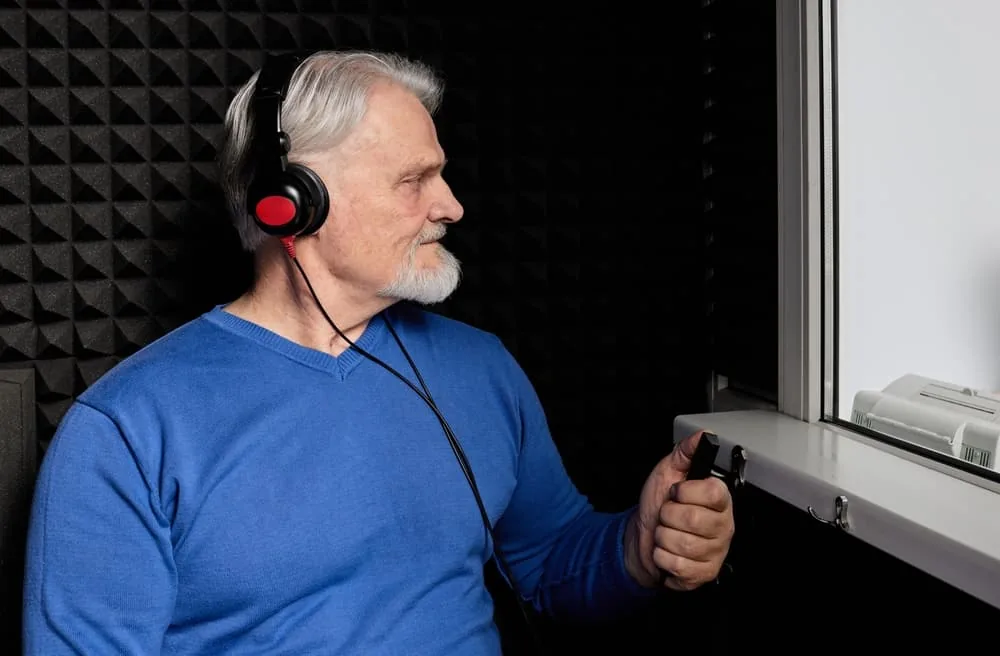
A modern hearing analysis employs various methods. The most common method is pure-tone audiometry. In this procedure, tones at different frequencies and volumes are played through headphones. The person being tested indicates whether they can hear the tone, resulting in an individual audiogram that documents the hearing threshold.
Speech audiometry tests the understanding of spoken words. These are played back at different volumes. The aim is to measure speech intelligibility at normal and reduced volumes. This type of test is particularly practical, as it simulates everyday communication.
Other procedures, such as tympanometry, examine the eardrum and pressure equalisation in the middle ear. Otoacoustic emissions (OAE) measure the response of the hair cells in the inner ear to acoustic stimuli, an important component of hearing screening in newborns.
In specialist facilities, audiometry may also be carried out using speech audiograms, frequency-specific measurement or brainstem audiometry, e.g. in cases of neurological concerns
How to prepare for the hearing test
Good preparation for the hearing test begins the day before. Ideally, you should avoid exposing yourself to excessive noise before the appointment, as this can overstimulate or tire your hearing. Stress and lack of sleep can also have a negative impact on concentration and perception.
On the day of the test, you should arrive at the appointment well-rested and avoid cleaning your ears with cotton buds. These can damage the eardrum or unintentionally push earwax deeper into the ear. It is better to gently rinse the ear with warm water whilst showering. If there is a large build-up of earwax, this should be removed by a doctor beforehand.
It is also helpful to bring a list of the medicines you are currently taking. Some medicines, such as certain antibiotics or diuretics, can affect your hearing. The hearing care professional can take this information into account when assessing your test results.
Make a note in advance of when you first noticed hearing problems. Are there specific situations in which your hearing is worse? Do you have difficulty understanding speech? This information helps the hearing care professional tailor the test specifically to your individual hearing situation.
You should also make a note of any questions you have beforehand. For example: How does a hearing aid work? What models are available? Do I need to see an ENT specialist with my test results? Being well prepared makes it easier to keep track of things during the appointment.
What happens during a hearing test: an overview of the process
A typical hearing test begins with a preliminary consultation. The hearing care professional or audiologist will ask about your current hearing ability, your daily routine, any pre-existing conditions and the reasons for your visit. This medical history forms the basis for selecting the appropriate test procedures.
Then the actual test begins. You take a seat in a quiet environment and wear special headphones. Through these, sounds at various frequencies and volumes are played to you. You indicate by pressing a button whether you can hear anything. This so-called pure-tone audiometry measures your hearing threshold.
This is usually followed by a speech test. During this, you will hear individual words which you repeat aloud. The audiologist records which words are correctly identified. These results are also included in your personal audiogram.
In some cases, a measurement of middle ear pressure (tympanometry) is also carried out, e.g. if ventilation problems or fluid behind the eardrum are suspected. Depending on its scope, a comprehensive hearing test takes between 15 and 30 minutes in total.
How to behave during the test
For the hearing test, it is important to remain attentive and relaxed. Do not let yourself be put under pressure; this is not an exam, but a measurement of your current hearing ability. It is perfectly fine if you do not hear some sounds or are unsure about certain words.
Try to concentrate on the sounds, but do not guess. An incorrectly identified sound will distort the result. The same applies to the speech test: only answer if you have really understood the word.
If there is anything you do not understand during the examination, please feel free to ask. The audiologist can explain the procedure at any time and answer your questions. It is particularly important to create a relaxed atmosphere when you are feeling unsure.
How the results are discussed
After the test, the hearing care professional will analyse the results and explain the audiogram to you. This diagram shows which sounds at which frequencies you can hear and the volume at which a sound becomes audible to you. The scale usually ranges from - 10 dB (very good hearing) to 120 dB (deaf).
Depending on how steeply the hearing curve drops in certain areas, the hearing loss is classified as mild, moderate or severe. Speech comprehension is also considered in this context: it may be the case that high frequencies are heard poorly, but speech is still well understood in a quiet environment - a typical pattern for age-related or noise-induced hearing loss.
The hearing care professional will explain whether a medical assessment is necessary or whether it makes sense to proceed directly with hearing aids. Important: You will receive your test results as a printout or digital file so that you can present them to your ENT doctor or health insurance provider if required.
What to do after the hearing test
The next step depends on the results. If your hearing is normal, a follow-up appointment in one to two years is recommended. If hearing loss is detected, fitting of hearing aids may follow. The hearing care professional will advise you on different styles, technical options and cost coverage.
In some cases, targeted hearing training may be beneficial, for example if your hearing has not been sufficiently stimulated over a long period. Measures for hearing protection, e.g. for noisy hobbies or work activities, will also be discussed.
You should also keep your test results safe. If your hearing deteriorates, previous audiograms can be used for comparison. Keeping a record is also helpful for monitoring changes over the years.
Questions to ask during your appointment
A hearing test is the perfect opportunity to find out everything you need to know about hearing. Make the most of this time to clarify any important questions. Here are a few examples:
- How often should a hearing test be repeated?
- What could be causing my hearing loss?
- How does a hearing aid work, both technically and in practice?
- Which models suit my lifestyle?
- What costs does my health insurance cover?
- Are there ways to prevent further hearing loss?
- How can I protect my hearing in the long term?
- What additional features do modern hearing aids offer (e.g. Bluetooth, app control)?
- Is hearing training worthwhile, and if so, how does it work?
Talking to your hearing care professional can help to ease any concerns and provide greater clarity on the next steps. The better informed you are, the more actively you can help shape your hearing health.