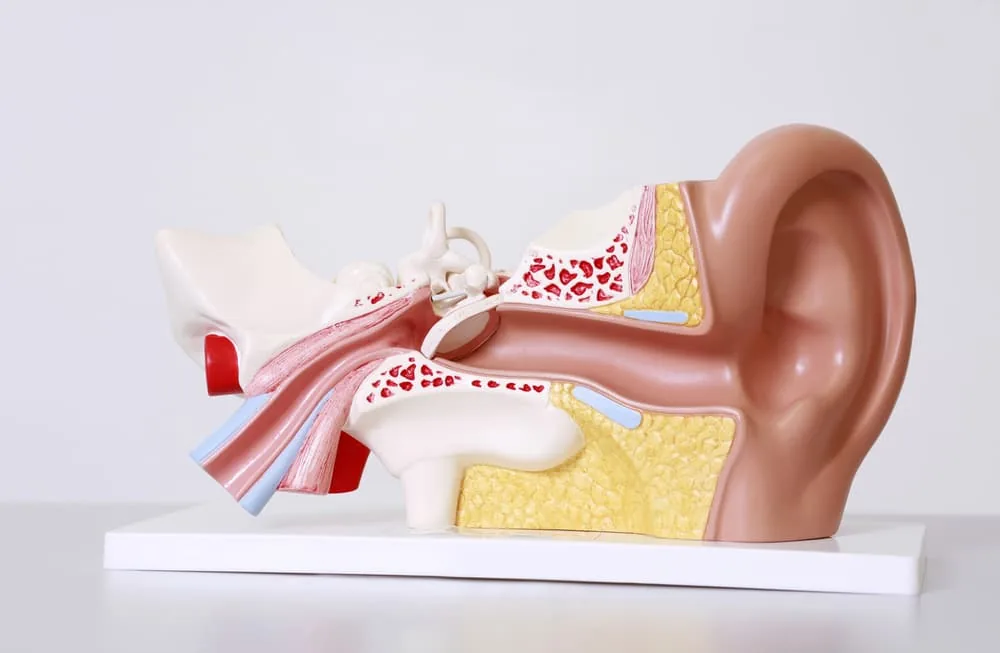
The ear canal is an unassuming yet hugely important part of the human auditory system. It forms the connection between the outer ear and the eardrum and plays a central role in the transmission and amplification of sound waves. At the same time, it performs protective functions and supports the delicate vestibular system in conjunction with the middle and inner ear. The following explains how the ear canal is structured, what roles it plays in the hearing process, and why its condition is crucial to the health of the entire ear.
Key Takeaways
- What is the ear canal?
- Detailed structure of the ear canal
- Function of the ear canal in hearing
- Interaction with the eardrum, middle ear and inner ear
- The ear canal as part of the hearing organ
- Diseases and disorders of the ear canal
What is the ear canal?
The ear canal, medically known as the external auditory meatus, is a slightly curved passage that extends from the entrance of the outer ear to the eardrum. It is part of the outer ear and measures around 2.5 to 3 centimetres in adults. Its main function is to capture sound waves from the environment and direct them towards the middle ear.
The ear canal is located in the temporal bone and runs in a gentle S-shaped curve. This shape protects the eardrum from direct draughts or small foreign objects. At the same time, the canal ensures that the sound energy is focused and reaches the eardrum slightly amplified.
Structure of the ear canal in detail
The ear canal consists of two anatomically distinct sections. The outer section, roughly the first third, is cartilaginous. This section contains hair follicles, sebaceous glands and so-called ceruminous glands, which together produce earwax (cerumen). The inner part of the ear canal is bony and more firmly attached to the skull. Both sections are lined with skin, although this is very thin and sensitive in the bony part.
Earwax serves to protect the ear. It keeps the skin supple, has an antibacterial effect and naturally transports dust, skin flakes and small foreign bodies outwards. The presence of tiny hairs also supports this cleansing function. This self-cleaning mechanism is a key element for the health of the outer ear.
Function of the ear canal in hearing
The main function of the ear canal is to transmit sound waves. As soon as sounds reach the outer ear, they are focused by its distinctive funnel shape and directed into the ear canal. There, they travel on to the eardrum, where they trigger mechanical vibrations.
The ear canal acts as an acoustic resonance chamber. Certain frequencies, particularly between 2,000 and 4,000 hertz, are slightly amplified by its shape. This is particularly important for speech comprehension, as many sounds lie within precisely this frequency range.
Interaction with the eardrum, middle ear and inner ear
The eardrum forms the end of the ear canal and separates it from the middle ear. When sound waves strike the eardrum, they cause it to vibrate. These vibrations are transmitted via the ossicles - the malleus, incus and stapes. The vibrations eventually reach the inner ear, where they are converted into nerve impulses.
The Eustachian tube is located in the tympanic cavity of the middle ear and is responsible for equalising pressure between the middle ear and the throat. Only when pressure conditions are optimal can the eardrum vibrate freely and sound be efficiently transmitted to the cochlea in the inner ear.
The inner ear, in turn, houses not only the cochlea but also the vestibular system with its semicircular canals. All these structures work closely together to enable a fine coordination of auditory perception, spatial orientation and movement.
The ear canal as part of the hearing organ
The ear canal is not merely a passive channel, but an active component of the human auditory system. Without it, the targeted transmission of sound to the eardrum would not be possible. The shape of the ear canal also influences the way frequencies are filtered and perceived.
As the hearing process continues, the mechanical vibrations are converted into electrical signals by the inner ear. Hair cells in the cochlea respond to specific pitches and transmit the impulses via the auditory nerve (nervus acusticus) to the brain, where they are consciously perceived as auditory impressions.
Diseases and disorders of the ear canal
One of the most common conditions affecting the ear canal is otitis externa, an inflammation of the external ear canal. It can be caused by bacteria, fungi or irritants and is often accompanied by pain, itching and swelling. Swimmers and frequent bathers are particularly affected.
Blockages caused by excessive or hardened earwax can also lead to discomfort. In rare cases, malformations such as ear canal atresia (congenital blockage) or benign bony growths (exostoses) occur. Disorders of the ear canal may manifest as sudden hearing loss, a sensation of pressure or ringing in the ears.
Cleaning and care of the ear canal
The ear canal has a natural cleaning system. Thanks to the combination of earwax production and the slow removal of dead skin cells towards the outer ear, the canal usually remains free of debris.
Cotton buds are not suitable for cleaning, as they often push earwax deeper into the canal, leading to blockages. They can also cause injury to the sensitive skin in the inner section. If necessary, gentle cleaning with lukewarm water or special ear sprays can help. In the event of persistent blockage, professional cleaning by an ENT specialist should be carried out.
The ear canal in medical diagnostics
The ear canal is usually examined using otoscopy. This allows the skin of the canal, the earwax and the eardrum to be visualised and examined for inflammation, changes or foreign bodies. The shape of the ear canal also plays a crucial role in the fitting of hearing aids.
The ear canal is taken into account in audiological diagnostics, as disorders in this area can impair sound transmission to the middle ear. A narrowing, inflammation or a wax plug can distort the results of hearing tests or make it difficult to reach a correct diagnosis.