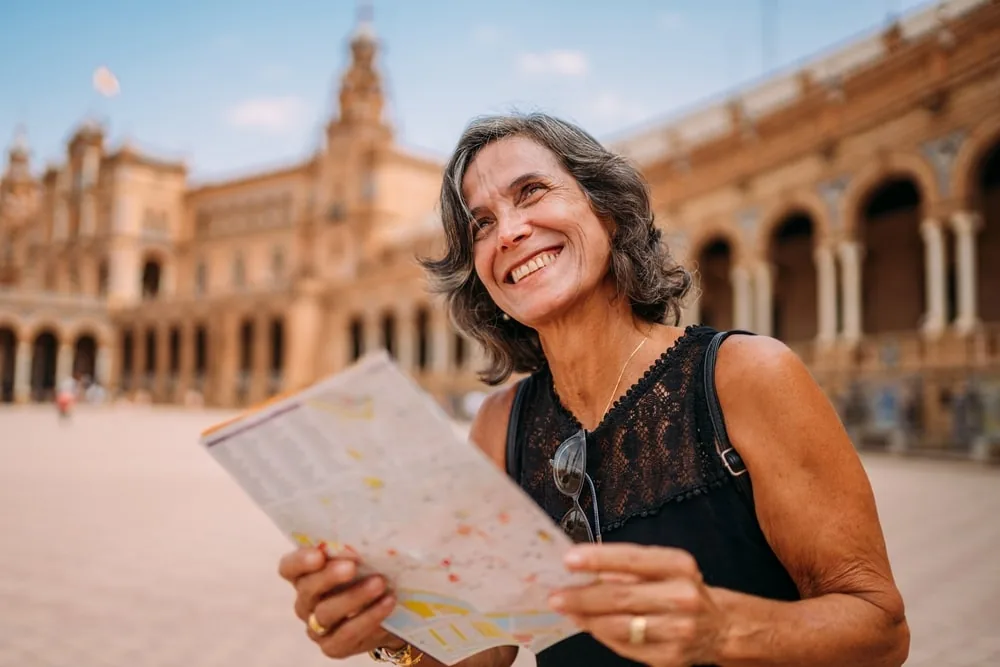
Travelling alone is becoming increasingly popular, particularly among people in the second half of their lives. More and more senior citizens are discovering the freedom to travel at their own pace and according to their own preferences, to get to know new cultures and to enjoy unforgettable experiences. Whether organised group tours, individual city breaks or relaxing cruises, travelling alone in later life offers a wide range of opportunities for personal fulfilment and enriches one’s twilight years with valuable experiences.
Key Takeaways
- Travelling alone in later life allows for self-determined holiday planning tailored to individual needs and interests
- Organised group tours offer social interaction, security and an all-inclusive package designed specifically for seniors
- Health preparation, suitable travel insurance and realistic planning are essential for successful solo travel
- Senior-friendly destinations score highly with good infrastructure, a suitable climate and accessible facilities
- Single room supplements can be avoided or reduced by using specialist travel providers
Why solo travel is becoming increasingly popular among older people
The desire to travel knows no age limit. Many people discover a longing for new horizons, particularly after their working life or following a phase of life marked by close family ties. Travelling alone is no longer seen as a last resort, but as a conscious choice for a self-determined travel experience. The time and flexibility gained in retirement open doors to adventures that may previously have been impossible due to time constraints or work commitments.
Self-determination and personal freedom
One of the greatest advantages of travelling alone lies in the complete autonomy over how you organise your holiday. When travelling alone, you decide for yourself on the itinerary, daily routine and activities. Sleeping in in the morning or setting off early, museum visits or days at the beach, active hikes or relaxing in a café - every decision is based solely on one’s own wishes. Many older solo travellers find this freedom liberating, especially if they previously had to take the needs of partners, family or work into account for decades.
Self-directed travel can also offer a valuable opportunity for self-reflection. In the peace and distance from everyday life, some people discover new facets of their personality or gain fresh perspectives on their lives. Overcoming challenges whilst travelling, whether a language barrier or an unfamiliar situation, can boost self-confidence and instil a sense of competence that may have been lost in other areas of life.
New perspectives and life experiences
Travelling in later life by no means implies sacrifice or restriction, but rather the chance for new inspiration and experiences. Many travellers report that, particularly in later life, they are more open to new encounters and can take the time to truly experience foreign cultures. Life experience often allows for a more relaxed approach to uncertainties and unexpected situations. Furthermore, older travellers frequently encounter a special friendliness and helpfulness that can, in some respects, even make travelling easier.
Getting to know new places, cultures and people broadens one’s horizons and enriches life with precious memories. For some, it is the fulfilment of long-cherished travel dreams; for others, the discovery of entirely new interests. Life in later years offers the opportunity to focus on what really matters, and for many, this includes gathering enriching travel experiences.
Types of travel for older solo travellers
The type of travel arrangement depends heavily on individual preferences, level of mobility and the desire for social contact. Various travel options are available for older solo travellers, each offering different advantages and disadvantages.
Organised group tours for singles and solo travellers
Organised group tours are among the most popular options for older solo travellers. They combine the advantages of travelling alone with the security and camaraderie of a group. Specialist tour operators have recognised that the 60+ age group has specific needs and offer programmes tailored to these. These trips are often designed so that no one feels left out; the shared experience is the focus, not relationship status.
The major advantage lies in the all-inclusive package: the tour guide takes care of the organisation, bookings and often the transfers too. At the same time, well-designed group tours offer plenty of freedom for individual activities. Participants can decide for themselves whether they wish to take part in all the scheduled activities or prefer to go their own way. Within the group, it is common to make casual acquaintances with people who share similar interests and life situations. It is not uncommon for friendships to develop that last beyond the trip.
Group tours offer a safe way to get started, particularly for people travelling alone for the first time. The atmosphere is usually relaxed and supportive, with many participants also travelling solo for the first time. Special offers are specifically aimed at single women or men aged 60 and over who value a sociable atmosphere and mutual support.
Individual travel and flexible planning
Those who prefer the greatest possible freedom opt for individual travel planning. This form of solo travel requires more initiative in the preparation stage, but rewards you with maximum flexibility. Independent travellers can change plans spontaneously, linger longer in places they like, and design their route entirely as they wish. Modern booking platforms and apps make organisation considerably easier and also allow for last-minute adjustments.
For travellers with reduced mobility or those travelling independently for the first time, destinations with good tourist infrastructure are recommended. Cities with well-developed public transport, senior-friendly hotels and German-language information services make independent exploration easier. Shorter trips or destinations not too far away can also be a good introduction to independent solo travel.
Cruises as a comfortable alternative
Cruises offer many advantages for older solo travellers. They allow you to discover different places without having to constantly pack your bags. The ship serves as a floating hotel and transports travellers comfortably from destination to destination. On board, there is a wide range of entertainment and activities, from cultural events and wellness facilities to culinary experiences. Meals are included in the price of the trip, which simplifies holiday planning.
Cruise ships also often offer special arrangements for solo travellers, such as shared dining groups or organised excursions for singles. The opportunity to enjoy both social moments and moments of solitude makes cruises attractive to many older solo travellers. Furthermore, medical care is guaranteed on board, providing additional peace of mind.
Organised group tours for singles and solo travellers
Organised group tours are among the most popular options for older solo travellers.
Individual travel and flexible planning
Those who prefer maximum freedom opt for individual travel planning.
Cruises as a comfortable alternative
Cruises offer many advantages for older solo travellers.
Health and safety when travelling alone
Careful preparation regarding health considerations and safety precautions forms the basis for relaxed and safe travel experiences in later life.
Health preparation and precautions
A health check-up with your GP is recommended before any long journey. They can assess whether any health restrictions need to be taken into account and what precautions might be advisable. If you have a chronic condition, it is important to carry sufficient medication and to find out about its availability in your destination country. A multilingual medication list can be helpful in an emergency.
Vaccinations should be updated in good time, particularly before long-haul trips. The first-aid kit deserves special attention and should contain, in addition to your usual medication, remedies for travel sickness, diarrhoea and minor injuries. When carrying strong painkillers, bear in mind that some countries have strict import regulations; a medical certificate in English may be helpful here.
Particular caution is advised on long-haul flights. Sitting for long periods can increase the risk of blood clots. Your doctor can prescribe special compression stockings and provide recommendations for exercises to do during the flight. Adequate fluid intake is particularly important when travelling and is often underestimated, especially in warm climates.
Dealing with mobility limitations
Limited mobility should not be a barrier to travel, but it does require realistic planning. When choosing destinations and accommodation, factors such as barrier-free access, the availability of lifts and short distances between key facilities can be decisive. Many hotels offer senior-friendly rooms with walk-in showers, raised toilets and other amenities.
A major concern for many older travellers is the fear of falling, as recovery can often take longer in old age. Taking care on uneven pavements, wearing suitable shoes with non-slip soles and adjusting your walking pace can reduce the risk. Aids such as a folding walking stick or Nordic walking poles can improve balance and provide greater safety. Regular balance and strength exercises before the trip can help keep the body fit.
Travel insurance and emergency planning
Comprehensive travel insurance is essential for older people travelling alone. International health insurance that also covers medically assisted repatriation is particularly important. Many standard insurance policies exclude cover from a certain age or charge higher premiums, so it is worth comparing different providers. Travel cancellation insurance can also be useful, as health reasons may necessitate cancellation shortly before departure.
A fully charged mobile phone should always be kept to hand in case of an emergency. It is advisable to note down important telephone numbers, emergency contacts, insurance details and your GP’s contact details, both digitally and on a piece of paper. When travelling to remote areas, a GPS emergency signal can offer additional safety. Keeping copies of important documents (passport, insurance card, vaccination certificate) in a separate place can also be helpful in the event of loss.
Suitable travel destinations for older people
The choice of destination has a significant impact on the success of the trip. Certain destinations are particularly well-suited for older solo travellers due to their infrastructure, climate and cultural offerings.
Criteria for senior-friendly destinations
Various factors play a role in choosing a destination. The climate should suit the traveller’s personal tolerance; for example, people with circulatory problems may find very hot or humid regions difficult. A good tourist infrastructure with reliable transport options, medical care and information services in English makes travelling considerably easier.
Flat terrain or well-connected areas with functioning lifts and escalators are advantageous for people with reduced mobility. The safety situation at the destination also deserves consideration; advice from the Foreign Office provides valuable guidance here. Destinations with cultural attractions that are not too far apart allow for relaxed sightseeing without excessive physical exertion.
Popular destinations in Europe
Within Europe, the Mediterranean countries are particularly popular due to their mild climate, rich culture and good infrastructure. Italy attracts visitors with its art, history and culinary diversity. Cities such as Rome, Florence or Venice offer countless cultural treasures, whilst the Tuscan countryside or the Amalfi Coast promise relaxation and nature experiences. Spain, too, with its lively cities such as Barcelona or Seville and its laid-back coastal regions, is a popular choice.
Greece combines ancient history with Mediterranean flair and hospitable people. Depending on your preference, the Greek islands offer peaceful retreats or lively holiday resorts with a wide range of activities. Portugal has also established itself as an attractive destination in recent years; the Algarve, with its picturesque coastlines, and Lisbon, with its relaxed atmosphere, attract many older travellers.
For nature lovers, Scandinavian countries such as Norway, with its fjords, or Sweden, with its forests and lakes, offer impressive landscapes and tranquillity. The Alpine regions of Austria, Switzerland and southern Germany attract visitors with hiking trails of varying difficulty and traditional culture. City breaks to Paris, Vienna, Prague or Amsterdam combine cultural highlights with easy accessibility and excellent infrastructure.
Long-haul travel for the adventurous
Long-haul travel is by no means out of the question in later life, but it does require more careful planning. South Africa is a popular destination for safari enthusiasts and offers a fascinating combination of nature, wildlife and culture. The tourist infrastructure is well developed, and many operators specialise in older travellers.
Southeast Asian countries such as Thailand or Vietnam are ideal for diving, delighting visitors with their exotic culture, friendly people and comparatively low prices. Medical care is generally good in tourist centres. However, the hot and humid climate should be taken into account. Countries in South America such as Peru or Argentina offer profound cultural experiences and spectacular natural wonders, but require good physical fitness and adaptability.
For long-haul trips, it is often advisable to join organised group tours tailored to the needs of older participants. These offer peace of mind through professional tour guides, handle logistical challenges and, at the same time, enable immersive travel experiences.
Practical tips for successful solo travel
A few practical considerations can make travelling alone in later life considerably easier and contribute to a successful holiday.
Accommodation and single room supplement
A common challenge for solo travellers is the single room supplement charged by many hotels. This can add up considerably and often makes solo travel more expensive than travelling as a couple. Some travel providers have recognised this issue and offer special singles’ trips where the single room supplement is reduced or waived entirely. It is worth specifically looking out for such offers.
When choosing accommodation, certain features are important for older travellers. Senior-friendly hotels offer shorter, preferably ground-level routes, working lifts, height-adjustable beds and easily accessible bathrooms with grab rails and non-slip surfaces. The location of the accommodation should be central enough to reach key attractions or shopping facilities without long walks, yet quiet enough to ensure a restful night’s sleep.
The atmosphere also plays a role. Some hotels offer special communal areas or organise activities for solo travellers, which facilitates social interaction. Smaller, family-run hotels or guesthouses can offer a more homely atmosphere than large hotel chains.
Packing list and travel preparation
Light luggage is an important factor, particularly for older travellers. Lifting and carrying heavy suitcases can be arduous or even risky. It is advisable to keep your luggage to a minimum and choose versatile clothing that can be mixed and matched. Modern suitcases with wheels and extendable handles make transport much easier. For air travel, it may be sensible to travel with hand luggage only or to use a luggage transport service.
A well-thought-out packing list prevents you from forgetting important items. In addition to clothing and toiletries, travel documents, insurance papers, medication and a first-aid kit are essential. A small rucksack or shoulder bag for day trips should be comfortable to carry. You should also remember to pack weather-appropriate clothing, sun protection and, if necessary, a lightweight rain jacket.
Technical aids can make travelling easier. A smartphone with navigation apps, translation programmes and important information is often indispensable. Power banks ensure that the device doesn’t run out of power whilst on the move. For people with hearing difficulties, it can be helpful to find out about aids for the hard of hearing before the trip, so that they can communicate effectively whilst travelling.
Making contacts and socialising
Travelling alone does not necessarily mean being lonely. Many older solo travellers particularly appreciate the opportunity to meet new people. Conversations with other travellers or locals often arise spontaneously. Those who approach others with an open mind usually make friends quickly.
Organised activities such as guided city tours, cookery classes or day trips offer natural opportunities to connect with like-minded people. Shared meals, for example in the hotel bar or at local restaurants, can also lead to pleasant encounters. Some hotels offer special tables for solo travellers, where you can easily strike up a conversation with others.
At the same time, it is important to respect your own comfort zone. Not every day needs to be packed with social activities; moments of peace and solitude are also part of a successful trip. Striking the right balance between socialising and retreat makes travelling alone an enriching experience that combines independence with the chance to meet new people.