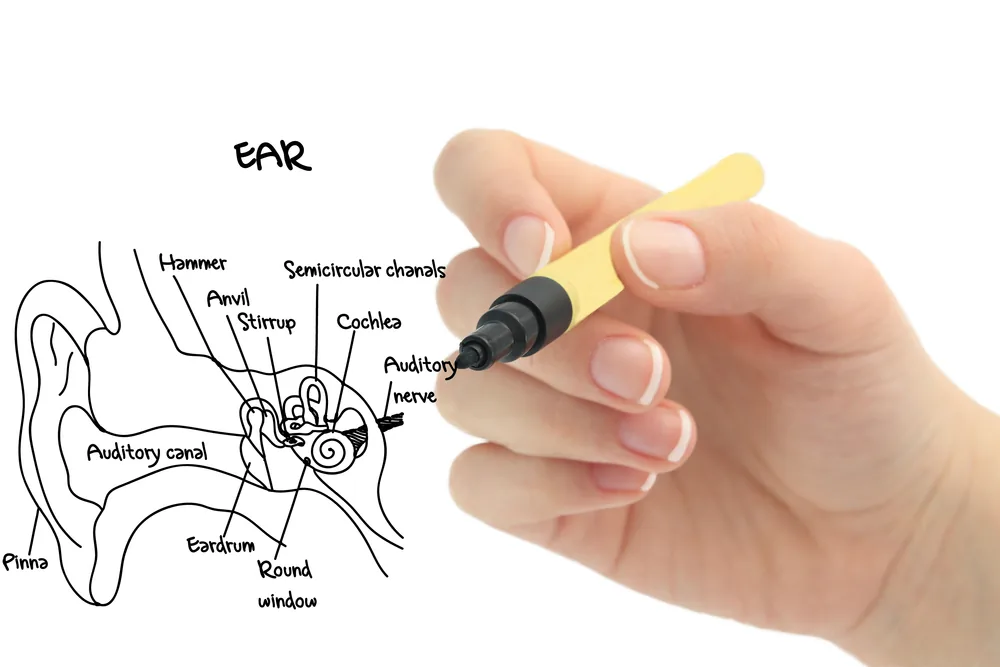
The auditory nerve plays a crucial role in how acoustic stimuli from the environment are processed by the brain. It not only transmits sound but is also a key component of our sense of balance. If the auditory nerve is damaged or affected by disease, this can have far-reaching consequences for hearing and spatial orientation. The following section explains the structure of the auditory nerve, how it functions, the typical conditions that can arise, and what targeted diagnosis and treatment involve.
Key Takeaways
- Structure and function of the auditory nerve
- Possible symptoms of disorders of the auditory nerve
- Conditions affecting the auditory nerve
- How the auditory nerve is examined and diagnosed
- Treatment options for disorders of the auditory nerve
- Living with a disorder of the auditory nerve
Structure and function of the auditory nerve
The auditory nerve, medically known as the vestibulocochlear nerve, is the eighth cranial nerve and consists of two parts: the cochlear nerve, responsible for hearing, and the vestibular nerve, responsible for balance. Together, they run from the inner ear through the internal auditory canal to the brainstem, where the signals are processed and transmitted to higher brain centres.
The inner ear contains the hair cells of the cochlea, which convert sound waves into electrical impulses. These impulses travel via the cochlear nerve to the brain, enabling the conscious perception of sounds, speech and noises. The vestibular nerve transmits information from the vestibular system regarding head position and movement. Both parts work closely together and are interconnected with other cranial nerves to ensure smooth perception and coordination.
Possible symptoms of auditory nerve disorders
Diseases or damage to the auditory nerve can cause various symptoms, depending on which part of the nerve is affected. A common consequence is unilateral or bilateral hearing loss. This can occur suddenly or gradually. Tinnitus, i.e. disturbing noises in the ear such as whistling or hissing, is also a typical sign of a conduction disorder in the auditory nerve.
If the vestibular nerve is affected, this often leads to severe dizziness, unsteadiness and balance problems. The symptoms often occur suddenly and are accompanied by nausea, nystagmus or vomiting. In such cases, prompt investigation is crucial to rule out serious causes.
Conditions affecting the auditory nerve
One of the best-known conditions affecting the auditory nerve is acoustic neuroma. This is a benign tumour that originates from the vestibular nerve. It usually grows slowly but can increasingly compress the auditory nerve over time. Typical symptoms include unilateral hearing loss, tinnitus and persistent dizziness. If this condition is suspected, imaging should be carried out at an early stage.
Inflammatory processes such as vestibular neuritis can also affect the auditory nerve. This condition primarily affects the vestibular nerve and is accompanied by acute vertigo, often without hearing loss. Other possible causes of symptoms include circulatory disorders, injuries or, in rare cases, genetic factors. Brain disorders can also affect the function of the auditory nerve.
How the auditory nerve is examined and diagnosed
If a disorder of the auditory nerve is suspected, the first step is usually to consult an ENT specialist. There, a detailed medical history is taken and initial screening tests are carried out, including hearing tests and balance tests. This determines whether, and to what extent, a hearing or balance disorder is present.
If the findings are abnormal, further imaging may be necessary. Magnetic resonance imaging (MRI) is particularly helpful in visualising tumours such as vestibular schwannoma. Neurological investigations or balance tests such as videonystagmography can also aid in diagnosis.
Treatment options for disorders of the auditory nerve
Treatment depends on the cause. Corticosteroids are frequently used for inflammatory conditions such as vestibular neuritis. They are intended to reduce inflammation and support a rapid recovery. Medicines for nausea and dizziness are also administered to alleviate symptoms.
In the case of an acoustic neuroma, a decision must be made on an individual basis as to whether surgical removal is necessary. Depending on the location and size, close monitoring or radiotherapy may also be considered. If hearing loss persists, hearing aids or cochlear implants can help to improve hearing.
In cases of balance disorders, physiotherapy is often used to stabilise balance. Targeted rehabilitation can help reduce limitations in daily life and restore confidence in one’s own body control.
Living with a disorder of the auditory nerve
If the function of the auditory nerve is permanently impaired, this can have a significant impact on daily life. Impaired hearing can make communication difficult, particularly in noisy environments or during conversations with several people. Dizziness or balance disorders affect mobility and often lead to uncertainty or falls.
Nevertheless, with the right treatment and support, it is possible to lead an active life. In addition to technical aids such as hearing aids, education and acceptance also play a role. Many people affected also benefit from rehabilitation programmes, balance training and sharing experiences with others.