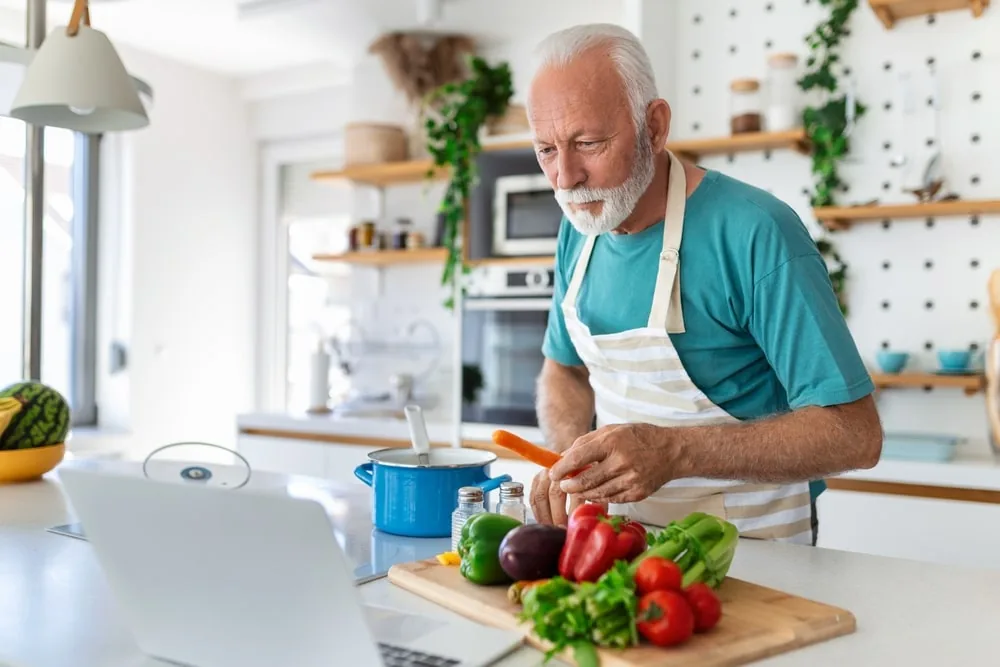
Cooking for just one person presents a particular challenge for many people. After a long day at work, reaching for ready meals often seems easier than preparing a fresh meal. Yet cooking for yourself offers numerous benefits for your health, well-being and even your budget. Discover how cooking for one can become a simple and enjoyable ritual with the right strategies and tips.
Key Takeaways
- Home-cooked meals give you greater control over ingredients and, according to scientific research, can help improve your health
- Cooking for one person is often quicker than cooking for several people and results in less food waste and fewer washing-up
- Strategies such as pre-cooking, freezing portions and using leftovers make meal planning more efficient
- Even without a fully equipped kitchen, cooking is possible using compact appliances such as slow cookers, toaster ovens or air fryers
- Social connections can be maintained through cooking by sharing meals, going on picnics or visiting farmers’ markets
- Proper stock management and planning help to avoid food waste and ensure you always have a balanced meal ready
Why cooking for one person is worthwhile
For many people living alone, it can be difficult to find the motivation to cook after a tiring day. Searching for recipes for a single portion often seems tedious, and the quick option of ready meals or fast food appears more tempting. However, this habit may have negative effects on physical and mental health, as ready-made products often contain few valuable nutrients but are high in unhealthy fats, sugar, sodium and calories.
According to scientific research, preparing your own meals at home is one of the simplest ways to promote good health. It allows for greater control over the ingredients used and helps to reduce calories and additives. Those who cook for themselves know exactly what is in their food and can make informed choices for a balanced diet.
Control over your own diet
One of the biggest advantages of cooking for yourself is having complete control over the ingredients. When cooking at home, you can use fresh, high-quality food, whereas ready meals often contain preservatives, flavour enhancers and hidden sources of sugar. This control allows you to cater to individual dietary needs or health requirements.
Furthermore, portion sizes can be precisely adjusted. In restaurants or with ready meals, portions are often too large or too small. Those who cook for themselves determine the quantity based on their own hunger and energy requirements. According to scientific studies, this can help maintain a healthy body weight.
Boosting self-esteem
Cooking for oneself is also an empowering experience. The ability to prepare a tasty meal can boost self-esteem and instil a sense of competence. The sense of achievement when a dish turns out well contributes to general well-being. Cooking thus becomes a form of self-care that creates time and attention for one’s own needs.
The unique benefits of cooking for one
Cooking just for yourself offers unique benefits that are not present to the same extent when cooking for several people. The most important is the freedom to eat exactly what you want, whenever you want. There is no need to compromise or take others’ preferences into account.
Time savings and efficiency
Preparing a single portion is often quicker than cooking for four or more people. Fewer ingredients need to be prepared, cooking times are shorter, and the whole process is more manageable. Many quick dishes can be on the table in under 35 minutes, including preparation and cooking.
There is also less washing up, particularly with so-called one-pot dishes, which are prepared in a single pot or pan. Eating straight from the cookware saves even more time on washing up. This efficiency makes cooking more practical and less time-consuming in everyday life.
Less food waste
Cooking for one person generally results in less food waste. Portions can be tailored precisely to your own needs, and leftovers can be specifically planned for future meals. This not only saves money but also contributes to a more sustainable lifestyle.
Food waste is a serious problem with both environmental and economic implications. By consciously cooking and planning for one person, you can actively help to reduce the amount of food you throw away. This requires careful shopping planning and the creative use of leftovers.
Time savings and efficiency
Preparing a single portion is often quicker than cooking for four or more people.
Less food waste
Cooking for one person generally results in less food waste.
Cooking with social connections
Cooking for one person doesn’t necessarily mean eating alone. Although some people eat out because they crave social interaction, home-cooked meals can also be enjoyed in company. There are various ways to combine cooking with socialising.
Shared meals and cooking get-togethers
One simple option is to cook a little extra and invite a colleague, neighbour or friend over. This way, the cooking can be shared, and both parties benefit from fresh, home-cooked meals. Cooking together allows you to try out new recipes and share culinary experiences.
Potluck dinners, where everyone brings something they’ve cooked themselves, are also a sociable way to eat together without one person having to do all the work. Such gatherings strengthen social bonds and turn eating into a communal experience. Anyone wishing to learn more about socialising in everyday life can find further information in relevant guides.
Picnics and public spaces
Another option is a picnic with home-cooked food in a park or another public space. This combines the joy of home-cooked food with time spent in nature and offers opportunities for chance encounters. A picnic can also be a good conversation starter if other people become curious about the food you’ve brought along.
Farmers’ markets and community activities
Social connections can also be made whilst shopping for ingredients. Visiting community or farmers’ markets not only provides access to fresh, local produce, but also the chance to strike up a conversation with producers and other market-goers. This often yields valuable cooking tips and recipe ideas. These personal encounters turn shopping into a social occasion.
Strategies for quick and efficient preparation
Cooking for one person doesn’t have to take ages. With the right strategies, meals can be prepared quickly and efficiently without compromising on quality or flavour. Planning plays a key role here.
Pre-cooking and freezing
One of the most effective strategies is to cook larger quantities in advance and freeze individual portions. Instead of cooking from scratch every day, several dishes can be prepared at the weekend or on a day off. These are then frozen in portions and defrosted and reheated as needed. This saves time on busy days whilst still guaranteeing a home-cooked meal.
Soups, stews, curries, bakes and many other dishes are suitable for freezing. It is important to use the right packaging in freezer-safe containers or bags, which should be sealed tightly to prevent freezer burn. Labelling them with the date and contents makes it easier to keep track of what’s in the freezer.
Prepare the main protein weekly
Another time-saving method is to prepare the main protein once a week. A roast chicken, a turkey breast or a piece of salmon can be cooked once and then used in various dishes throughout the week. The meat or fish can be used in soups, salads, tacos, pasta or sandwiches.
This method ensures variety without having to go through the entire cooking process every time. The main ingredient is already ready, and only the side dishes and sauces need to be freshly prepared. This significantly reduces daily cooking time.
Creative use of leftovers
Leftovers don’t have to be boring. With a little creativity, you can create completely new dishes from the remains of a meal. Roast chicken from the day before can be wrapped in a tortilla with rice and vegetables to make a wrap. Leftover vegetables are ideal for a vegetable stir-fry, a frittata or a soup.
Reinventing leftovers not only reduces food waste but also adds variety to your diet. It is also a cost-effective way to make several meals from the same basic ingredients.
Time-saving shortcuts
Sometimes it makes sense to use time-saving shortcuts. Buying pre-cut and washed vegetables or salad can significantly reduce preparation time. Pre-cooked grains such as quinoa or tinned rice are also handy for quick meals.
Another option is meals that require no cooking, such as fresh salads, wraps with raw vegetables, or probiotic dishes like yoghurt with fruit and nuts. These dishes are not only quick to put together, but also healthy and nutrient-rich.
Cooking without a fully equipped kitchen
Not everyone has a fully equipped kitchen with a hob, oven and dishwasher. Space is often limited, particularly in halls of residence, small flats or hotel rooms. Yet even under such circumstances, cooking is perfectly possible. Space-saving and versatile kitchen appliances make it easy to prepare delicious meals even in the smallest of spaces.
Slow cooker
The slow cooker is an ideal appliance for cooking without supervision. Stews, chiles or curries can be prepared in the morning and then cook all day at a low temperature. In the evening, a ready-made, fragrant meal awaits. The slow cooker also uses less energy than a conventional hob and is particularly practical for working people.
Toaster oven
A toaster oven is a compact alternative to a large oven. It is suitable for baking and roasting small portions and is particularly energy-efficient. Whether it’s grilled sandwiches, small bakes or roasted vegetables, the toaster oven is versatile and takes up little space.
Hot air fryer
The hot air fryer, also known as an air fryer, offers a healthier alternative to traditional deep-frying. Food is cooked until crispy using hot air, without the need for large quantities of oil. The hot air fryer is also excellent for reheating leftovers, making them crispy again.
Other compact appliances
A simple hotplate allows you to prepare all the dishes that can be made on a hob. It is particularly handy in rooms without a built-in hob. With a bit of creativity, a rice cooker can be used not only for rice but also for one-pot meals with vegetables and protein. The steamer is one of the quickest and healthiest cooking methods and preserves vitamins and nutrients perfectly.
Planning and stocking up
Careful planning is crucial for successful cooking for one person. Good stock management ensures that the necessary ingredients for a tasty meal are always available, without buying too much.
Shopping in small quantities
Those living alone should buy food in single portions or small packs to avoid waste from spoilage. Many supermarkets now offer single portions. Buying loose goods also allows you to purchase exactly the amount you need. You should only buy as much as can be prepared and eaten in the near future.
Building up a stock of non-perishable items
A well-stocked pantry makes spontaneous cooking much easier. Non-perishable foods such as pasta, rice, tinned food, pulses, nuts and spices should always be in stock. Frozen vegetables and fruit are also practical staples that keep for a long time and can be used quickly when needed.
With these basic ingredients, you can prepare a wide variety of dishes even without buying fresh produce. Having a stock saves time and prevents you from having to resort to unhealthy ready-made products when short of time.
Storage without a fridge
Anyone without a fridge must be particularly careful when selecting and storing food. Root vegetables such as potatoes and onions will keep for weeks in a cool, dry storage room. Lettuce and green leafy vegetables, on the other hand, are very delicate and should be used within one or two days.
Meat and dairy products cannot be kept fresh without refrigeration and must therefore be prepared and consumed immediately after purchase. A cool box with ice can help keep perishable food fresh for a short time, although care must be taken to ensure that the food remains sealed and does not come into contact with the melt water.
Recipe ideas for single portions
Looking for recipes for one person can seem challenging at first, as many recipes are designed for four or more portions. However, with a bit of practice, recipes can easily be adapted, or you can specifically search for recipes for single portions.
Quick pan-fried dishes
Pan-fried dishes are ideal for single people. Protein, vegetables and side dishes can all be cooked at the same time in one pan. A simple example is pan-fried chicken with peppers, courgettes and rice. Everything is cooked in one pan, saving time and washing-up.
Soups and stews
Soups and stews are perfect for cooking in advance and freezing. A vegetable soup, a lentil soup or a chilli con carne can easily be made in larger quantities and frozen in portions. This means you always have a home-cooked meal ready that just needs to be reheated.
Salads and cold dishes
Salads aren’t just a refreshing option in summer. A colourful salad with leafy greens, tomatoes, cucumbers, avocado and a protein such as chicken breast or tuna is quick to prepare and packed with nutrients. Pasta salads or quinoa salads are also easy to prepare and will keep in the fridge for a few days.
Health benefits of home cooking
According to scientific studies, regularly cooking fresh meals can have positive effects on health. Home-cooked food generally contains more nutrients and fewer unhealthy additives than ready-made products. Those who regularly maintain a balanced diet may benefit from improved health in the long term.
Control over ingredients and nutrients
When cooking at home, ingredients can be chosen carefully. Fresh vegetables, whole grains, lean meat and healthy fats such as olive oil contribute to a balanced diet. Avoiding excessive sugar, salt and unhealthy fats is much easier when cooking at home than with ready meals.
Promoting healthy eating habits
People who cook for themselves regularly often develop a better understanding of food and how it is prepared. This can lead to more mindful eating habits. The time invested in preparation also fosters a more mindful relationship with food and enhances the enjoyment of the meal.
Practical tips for everyday life
A few practical tips can make cooking for one person even easier in everyday life. With small adjustments and habits, cooking becomes a pleasant routine rather than a chore.
Weekly planning
Planning meals for the week helps to organise your shopping and ensure that all the necessary ingredients are on hand. At the weekend, you can decide on the dishes for the coming week. This saves time spent thinking about what to cook each day and prevents spontaneous, often unhealthy food choices.
Opt for simple recipes
Especially in everyday life, simple recipes with few ingredients and short preparation times should be preferred. Complicated dishes with many steps can be frustrating and reduce your motivation to cook. Simple but tasty recipes make cooking a positive experience.
Cooking as relaxation
Cooking can also be seen as a form of relaxation. Listening to music whilst cooking or preparing something simple whilst watching TV combines the practical with the enjoyable. Spending time in the kitchen can help you leave the working day behind and switch off.
Frequently asked questions about cooking for one
How can you save money when cooking for one person?
You can save money through careful planning, buying seasonal and local produce, and avoiding food waste. Cooking in advance and freezing meals, as well as using leftovers, also help to keep costs down. Avoiding expensive ready meals and restaurant visits in favour of home-cooked meals saves a lot of money in the long run.
Which kitchen appliances are particularly useful for single people?
Compact and versatile appliances such as slow cookers, air fryers, toaster ovens, rice cookers and possibly a single hotplate are particularly useful. These appliances take up little space, are energy-efficient and allow for a wide range of cooking methods.
How long do home-cooked meals keep in the fridge?
Most home-cooked meals will keep in the fridge for around three to four days. It is important to prepare them hygienically and store them in clean, airtight containers. Meals should be cooled quickly after cooking and stored in a cool place. Many meals can be kept in the freezer for several months.
How can you add variety to your diet?
Variety comes from trying out new recipes, different spices and various cooking methods. Switching between different cuisines, such as Mediterranean, Asian or Latin American, also adds variety. Creatively using leftovers to make new dishes brings variety too.
Is cooking for one person more expensive than ready meals?
In the long run, cooking for yourself is generally cheaper than regularly buying ready meals or eating out. Although individual ingredients may seem more expensive at first, careful planning, pre-cooking and avoiding waste can significantly reduce costs. It’s also better for your health, which indirectly saves money too.