Protein requirements in older age
As we age, the body’s nutritional requirements change fundamentally. Whilst calorie requirements often decrease, the need for high-quality protein increases significantly at the same time. An adequate protein intake plays a key role in maintaining muscle mass, bone health and general vitality in older age. This comprehensive guide explains the scientific background, highlights the consequences of an inadequate protein intake and offers practical solutions for an optimal protein intake in older adults.
Key Takeaways
- Protein requirements increase with age to 1.0 to 1.2 grams per kilogram of body weight per day
- Protein deficiency leads to muscle loss (sarcopenia), weakness and an increased risk of falls
- Animal and plant-based protein sources should be combined for an optimal amino acid supply
- As a key amino acid, leucine plays a special role in muscle building in older age
- Physical activity enhances the positive effects of a high-protein diet
- In cases of kidney disease, medical advice is necessary before increasing protein intake
Why protein becomes particularly important in old age
The changing metabolic state of the ageing body
As we age, the human body undergoes various physiological changes that significantly influence nutritional requirements. Whilst basal metabolic rate - and thus energy requirements - tend to decrease, the need for high-quality proteins paradoxically increases. This seemingly contradictory development stems from the declining efficiency of the body’s own muscle protein synthesis.
From the age of 30, the human body loses an average of 0.3 to 0.8 per cent of its muscle mass per year. This process accelerates after the age of 50 and, without targeted countermeasures, can lead to a significant loss of original muscle mass. At the same time, the body’s ability to efficiently form new muscle cells from the food consumed decreases. Older people therefore need more protein to achieve the same muscle-building effect as younger people.
Understanding and preventing sarcopenia
Sarcopenia, the medical term for age-related muscle loss, is considered one of the most significant health threats in old age. It begins gradually and often goes unnoticed for a long time, as the loss of muscle mass can be masked by an increase in fat tissue. Those affected do not necessarily appear underweight, but nevertheless suffer from the consequences of muscle loss.
The effects of sarcopenia go far beyond purely aesthetic considerations. It leads to a measurable decline in muscle strength and function, which directly impacts the ability to perform everyday tasks. Simple activities such as climbing stairs, opening jars or carrying shopping bags become increasingly difficult. These functional limitations can set off a vicious circle: physical activity decreases due to perceived weakness, which further accelerates muscle wasting and can lead to increasing frailty and a loss of physical activity in old age.
The increased protein requirement in old age explained scientifically
Current recommendations from professional societies
The German Nutrition Society recommends an increased daily protein intake of 1.0 gram per kilogram of body weight for people aged 65 and over, whilst 0.8 grams is considered the guideline for younger adults. Some international professional societies are discussing even higher values.
This increase in recommendations is based on extensive scientific research showing that, whilst the previous values are sufficient to prevent protein deficiency, they are not optimal for maintaining or even increasing muscle mass in old age. The new guidelines aim not only to ensure survival, but also to actively promote quality of life and functionality in old age.
Taking individual factors into account
However, actual protein requirements may differ significantly from the general recommendations and depend on various individual factors. In cases of acute or chronic illness, following surgical procedures, or where malnutrition is already present, a higher protein intake may be necessary. This adjustment is particularly important for people who are frail or have been diagnosed with sarcopenia.
Another important aspect is the so-called ‘protein gap’ in old age. This arises from the combination of increased requirements and, at the same time, often reduced food intake. Loss of appetite, difficulty chewing and swallowing, side effects of medication or social factors such as loneliness can lead to older people eating less overall. In this situation, it becomes particularly challenging to meet the increased protein requirements.
Current recommendations from professional societies
The German Nutrition Society recommends an increased daily protein intake of 1.0 gram per kilogram for people aged 65 and over...
Taking individual factors into account
However, actual protein requirements can vary significantly from the general recommendations and depend on various individual factors.
Recognising the warning signs of protein deficiency
Interpreting physical symptoms correctly
Protein deficiency usually develops gradually and is often misinterpreted as a normal sign of ageing in its early stages. The first signs include increasing muscle weakness, which manifests as difficulty getting up from a chair or carrying objects. Those affected often report tiring more quickly during physical activities and a general lack of energy.
Further signs may include delayed wound healing and an increased susceptibility to infections, as proteins are important for both tissue regeneration and immune function. In advanced stages, water retention may occur, as a protein deficiency can impair the body’s fluid regulation.
Effects on mental health
The consequences of protein deficiency are not limited to the body, but also affect mental and emotional well-being. Proteins provide the building blocks for important neurotransmitters in the brain, including serotonin and dopamine, which are responsible for mood regulation. A deficiency in these neurotransmitters can lead to mood swings, irritability and depressive moods.
Furthermore, problems with concentration and reduced mental performance may occur. The combination of physical weakness and psychological impairments can lead to social withdrawal and isolation, which significantly reduces quality of life and contributes to a worsening of the negative spiral.
Optimising a protein-rich diet
The best sources of protein for older people
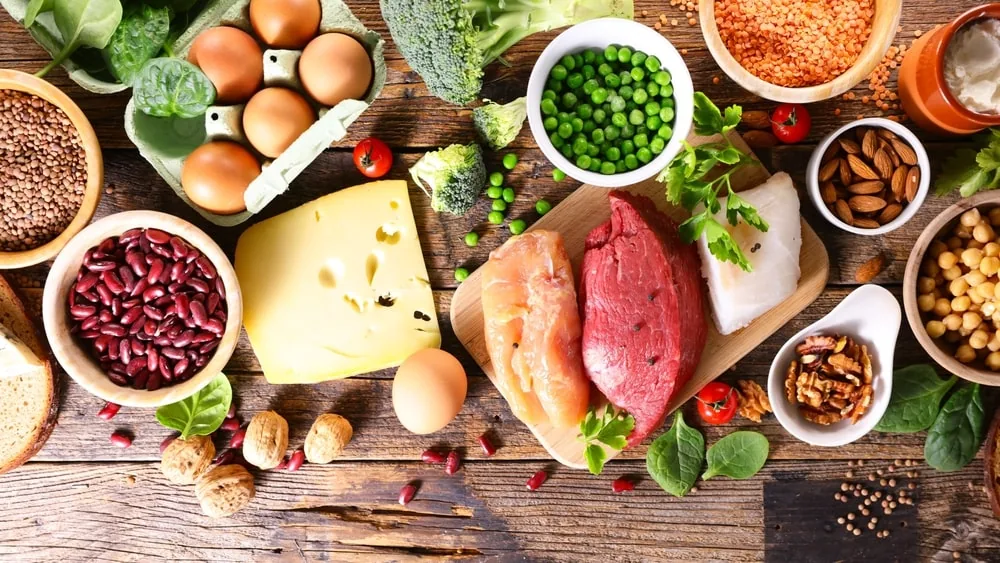
A balanced protein intake in old age should include both animal and plant-based sources. Animal proteins are characterised by their high biological value, meaning they contain all essential amino acids in a ratio that is beneficial to the human body. The most valuable animal protein sources include lean meat, fish, eggs and dairy products such as quark, cheese and yoghurt.
Plant-based proteins offer the advantage of also providing important fibre, vitamins and phytochemicals. Pulses such as lentils, peas and beans, as well as nuts, seeds and whole grains, are excellent sources of plant-based protein. By skilfully combining different plant-based protein sources, the biological value can be significantly increased, for example through the classic combination of pulses with grains.
The importance of the amino acid leucine
Among the amino acids, leucine occupies a special position as it acts as a key signal for muscle protein synthesis. Studies show that older people require a higher amount of leucine to stimulate muscle protein synthesis - a phenomenon known as ‘anabolic resistance’. Whilst around 20 grams of high-quality protein per meal is sufficient to stimulate muscle protein synthesis in younger people, older adults often require 25 - 30 grams of protein per meal to achieve the same effect.
This amount corresponds to around 25 - 30 grams of high-quality protein per meal. Whey protein, meat, fish, eggs and dairy products are particularly rich in leucine. However, plant-based sources such as soya beans and other pulses can also contribute to leucine intake. It is very important to spread protein intake evenly throughout the day.
Practical implementation in everyday life
Simple strategies for more protein
The best way to switch to a higher-protein diet is through gradual adjustments to your usual eating routine. A tried-and-tested approach is to add a protein-rich component to every meal. Breakfast offers the greatest potential for optimisation here, as it is traditionally often high in carbohydrates. Simple additions such as an extra egg, quark with muesli or cheese on bread can significantly increase the protein content.
Snacks offer further opportunities for protein intake. Nuts, yoghurt, cottage cheese or a glass of milk are practical protein-rich snacks. For lunch and dinner, care should be taken to ensure that around a quarter of the plate consists of protein-rich foods. This can include meat, fish, tofu, pulses or eggs.
Solutions for specific challenges
Many older people face specific challenges when it comes to eating. If you have difficulty chewing or swallowing, softer protein sources such as fish, eggs, quark or finely minced meat can be helpful. Homemade protein shakes, fortified soups or creamy spreads can also contribute to your protein intake. These forms of food intake can be particularly suitable for people with swallowing or chewing problems and support healthy weight management in older age.
If appetite is reduced, it can be helpful to eat smaller but more frequent meals. Five to six small, protein-rich meals spread throughout the day can be more effective than three large main meals. Enriching meals with protein-rich ingredients such as grated cheese, chopped nuts or protein powder can also increase protein intake without significantly increasing the volume of the meals.
Special diets and dietary supplements
Vegetarian and vegan diets in older age
A vegetarian diet that includes eggs and dairy products can easily meet protein requirements in older age. However, special attention is required with a strictly vegan diet. Studies indicate that vegan older adults are more frequently affected by protein deficiency, as plant-based proteins often have a lower biological value and larger quantities of food are required to meet requirements.
The solution lies in consciously combining different plant-based protein sources and specifically selecting plant-based foods that are particularly rich in protein. Soya and soya products, quinoa, amaranth and buckwheat are examples of plant-based proteins with a particularly favourable amino acid profile. In addition, vegan older adults should pay particular attention to ensuring an adequate intake of other critical nutrients such as vitamin B12, calcium and omega-3 fatty acids.
When dietary supplements are advisable
In principle, protein requirements should be met through a balanced diet. However, dietary supplements can be a valuable addition in certain situations. In cases of severe loss of appetite, following surgical procedures, in the presence of serious chronic illnesses, or when natural food intake is insufficient, protein supplements can help prevent or remedy a deficiency.
Whey protein powder is a good choice due to its high leucine content and rapid absorption by the body. It can be easily stirred into milk, yoghurt or smoothies. Plant-based protein powders made from peas, rice or hemp can also be alternatives for people who wish to avoid animal products. However, it is important to note that dietary supplements should never replace a balanced diet, but only complement it.
The importance of exercise for protein utilisation
An optimal protein intake alone is not sufficient to maintain or build muscle mass. Only the combination of adequate protein intake and regular physical activity leads to the desired effects. Exercise, particularly strength training, stimulates muscle protein synthesis and significantly enhances the effect of the protein consumed.
Studies show that the combination of protein intake and resistance training has synergistic effects. This means that the combined effect of both measures is greater than the sum of their individual effects. As few as two to three strength training sessions per week can lead to measurable improvements in muscle mass and strength in older adults. It is never too late to start - positive effects can still be achieved even at a very advanced age.
Special precautions and contraindications
When increased protein intake can be problematic
Whilst increased protein intake is beneficial for most healthy older people, there are certain health conditions where caution is advised. Particularly in cases of severe kidney disease, a high protein intake can place additional strain on kidney function and accelerate the progression of the disease. Kidney function naturally declines with age, which is why regular check-ups are important.
For patients with advanced kidney failure who do not yet require dialysis, specific recommendations apply of 0.6 to 0.8 grams of protein per kilogram of body weight per day. For dialysis patients, however, the requirement may rise again to up to 1.2 grams to compensate for protein losses caused by the treatment. These examples illustrate how important individual advice is in cases of pre-existing conditions.
The role of medical supervision
In cases of existing chronic conditions, particularly kidney, liver or metabolic disorders, any increase in protein intake should always be discussed with the treating doctor. Interactions may also occur when taking certain medications. Professional nutritional advice can help determine individual requirements and develop a practical dietary plan that both meets protein needs and takes any health restrictions into account.
Furthermore, regular monitoring of muscle mass and function, as well as relevant blood values, can help to track the success of the dietary change and make adjustments where necessary. Modern methods such as bioelectrical impedance analysis or DEXA scans enable a precise determination of body composition and can provide valuable insights into the effectiveness of the measures.
A conscious and needs-based protein intake in older age is a key component in maintaining physical and mental performance. Combined with regular physical activity and taking individual health factors into account, it can make a significant contribution to maintaining quality of life in older age and promoting an active, self-determined life.