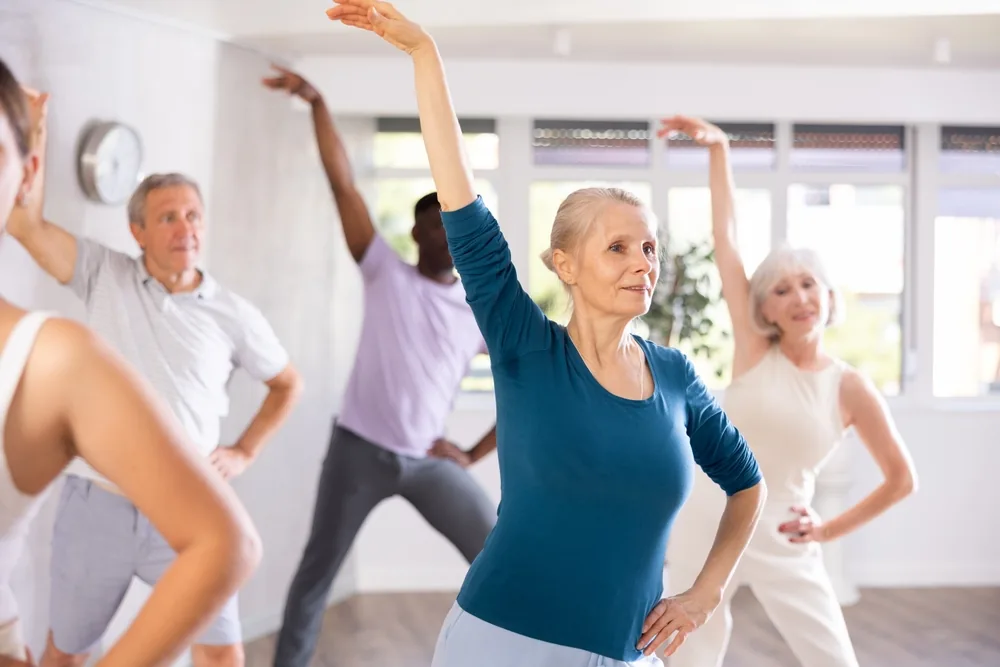
As you get older, regular exercise becomes increasingly important. You might think that staying active gets harder as you age, and in some ways that’s true. But that doesn’t mean you should neglect it. On the contrary: exercise can help improve your quality of life, maintain your health and keep you feeling fit and active. Find out everything you need to know about exercise in later life and how to incorporate it into your daily routine.
Key Takeaways
- Regular exercise reduces the risk of chronic conditions such as high blood pressure, cardiovascular disease and diabetes
- Targeted exercises counteract age-related muscle loss and maintain your mobility
- Exercise releases endorphins, reduces stress and improves general well-being
- Balance and coordination training minimises the risk of falls in older age
- Joint-friendly sports such as swimming, Nordic walking and yoga are particularly recommended
- Exercise programmes can be tailored to individual health restrictions
The health benefits of exercise in older age
Promoting physical health
One of the most important benefits of exercise in old age is the promotion of your physical health. Regular exercise can help reduce the risk of chronic conditions such as high blood pressure, cardiovascular disease and diabetes. Exercise not only strengthens your muscles but also your circulatory system, which in turn protects your heart.
Maintaining and improving muscle strength is particularly important in old age. As we age, muscle mass decreases, which can lead to weakness and an increased risk of falls. Through targeted exercises, you can counteract muscle loss and strengthen your muscles. This is not only beneficial for your mobility but also for your general agility.
Positive effects on well-being
Not only your physical health but also your mental health benefits from regular exercise. Studies have shown that exercise in later life significantly improves quality of life and enhances general well-being, especially when done with enjoyment. Exercise releases endorphins, also known as ‘happiness hormones’. These hormones can reduce stress, improve mood and even help prevent depression.
Another positive effect of exercise is improved balance and coordination. These skills are particularly important in older age, as they help minimise the risk of falls. With the right exercises, you can train your balance and thus significantly reduce the risk of falling.
Physical benefits
- Strengthening of muscles and the circulatory system
- Reduced risk of chronic diseases
- Maintaining flexibility and mobility
- Improved balance and coordination
Mental benefits
- Release of endorphins (‘happiness hormones’)
- Reducing stress and preventing depression
- Improvement in quality of life and well-being
- Promotion of mental clarity and concentration
Exercise in everyday life: How to incorporate activity into your daily routine
Incorporating exercise into daily life
It doesn’t always have to be a lengthy exercise class to keep fit as you get older. Even small adjustments to your daily routine can make a big difference. For example, try incorporating short walks into your daily routine. This could be a trip to the supermarket or a leisurely stroll through the park. Everyday activities such as taking the stairs instead of the lift, or leaving the car at home and walking instead, also have a positive effect on your health.
Incorporating exercise into your daily routine is the key to a more active life. You don’t need to do any special exercises or draw up a training plan. It’s about consciously making small changes that help you bring more movement into your life. This can be as simple as standing up and stretching during long periods of sitting, or doing household chores that require physical activity.
Simple exercises for in between
If you’re at home and don’t have much time, there are also simple exercises you can do in between tasks. These require very little space and no special equipment. Simple stretching exercises, squats or light strength-building exercises can help you maintain your flexibility and muscle strength. These exercises are easy to integrate into your daily routine and help you stay active.
Exercises that boost your muscle strength and endurance are particularly recommended. This type of exercise not only strengthens your muscles but also helps improve your cardiovascular health. It is important that you do the exercises regularly, even if it is only for a few minutes a day. These short bursts of activity add up over time and help maintain your health and mobility.
Sports and activities for older adults: What suits you?
Recommended sports
Even in old age, there are numerous sports that are ideal for staying active. Sports for seniors, in particular, are specifically tailored to the needs of older people. These are exercises and activities that improve your mobility, strengthen your muscles and, at the same time, minimise the risk of injury.
Popular sports for older people include swimming, Nordic walking and gentle cycling. These activities do not put too much strain on your joints whilst helping to improve your stamina and cardiovascular health. Swimming is particularly good for people with joint problems, as it is gentle on the joints yet still exercises the whole body. Nordic walking combines the benefits of walking with upper-body training through the use of poles, which also improves muscle strength.
Muscle strengthening and endurance training
In addition to the sports mentioned above, there are also specific muscle-strengthening and endurance training programmes suitable for older adults. These types of training are particularly effective for maintaining and improving physical performance as we age. A well-structured training programme should include both strength and endurance elements to ensure a balanced workout.
Muscle-strengthening exercises such as light weightlifting or bodyweight exercises can help slow down muscle loss and maintain strength. Endurance training such as light jogging, cycling or swimming helps improve cardiovascular health whilst promoting fat burning. Regular training that incorporates both elements is ideal for optimising your health and fitness as you age.
Swimming
Gentle on the joints and works the whole body. Particularly suitable for joint problems and arthritis, as the buoyancy of the water minimises the strain.
Nordic walking
Combines walking with effective upper-body training through the use of poles. Improves endurance, muscle strength and coordination in equal measure.
Cycling
A low-impact endurance activity that strengthens the cardiovascular system and promotes fat burning; can also be done as a gentle workout on an exercise bike.
Yoga & Tai Chi
Gentle, flowing movements improve balance and flexibility and promote mental relaxation. Ideal for fall prevention and stress relief.
Safety and prevention: How to avoid falls and injuries
Minimising the risk of falls
As we get older, the risk of falls and injuries increases. This is often due to a combination of declining muscle strength, reduced balance and any existing medical conditions. However, this does not mean you can no longer move safely. With the right exercise recommendations, you can significantly reduce the risk of falling.
An effective way to prevent falls is to regularly practise your balance and coordination. Exercises such as standing on one leg, light dancing or specific balance and coordination exercises can help you stay steadier on your feet. Yoga and Tai Chi are also excellent for improving your balance whilst reducing stress.
Improving balance and coordination
As already mentioned, balance and coordination play a crucial role in minimising the risk of falls in older age. There are numerous exercises specifically designed to improve these skills. These include training on unstable surfaces, such as a balance board or a simple cushion. Such exercises challenge your muscles and nervous system to constantly readjust, which increases stability and responsiveness.
Exercise programmes based on gentle stretching and slow, controlled movements are also ideal for improving balance. Tai Chi, a martial art originating in China, is particularly recommended as it combines gentle, flowing movements with a focus on breathing and concentration. These exercises not only promote balance but also mental clarity and general well-being.
Training your balance
Exercises such as standing on one leg, light dancing or training on unstable surfaces such as a balance board will strengthen your stability and responsiveness in the long term.
Consult your doctor
Talk to your doctor or physiotherapist before starting a new exercise programme, especially if you have any existing medical conditions or have been inactive for a long time.
Build up slowly
Start with light exercises and gradually increase the intensity. This will help you avoid overexertion and give your body time to adapt.
Non-slip shoes
Wear suitable, non-slip footwear and ensure a safe training environment, both indoors and outdoors.
Personalised adaptation: exercise and health restrictions
Dealing with illnesses and physical limitations
It is perfectly normal for health limitations to arise as you get older, which may affect your mobility. However, this should not stop you from staying active. In fact, there are many ways to adapt exercise to your individual needs and health conditions. This can be achieved through modified exercises or alternative forms of movement.
If, for example, you suffer from high blood pressure, you can opt for gentler activities such as swimming or yoga, which do not place excessive strain on your cardiovascular system. Even for conditions such as arthritis, there are specialised exercise programmes that are gentle on the joints whilst promoting mobility. Here, it is important to work with your doctor or physiotherapist to find the best programme for your individual needs.
Adapting activities to individual needs
Every person is unique, and this is particularly true in old age. What suits one senior may not be right for another. It is therefore important to adapt your physical activities to your specific needs and abilities. It doesn’t matter whether you are a beginner or have been active all your life. There is always a way to integrate exercise into your daily routine that is tailored to your individual requirements.
It is particularly helpful to make use of options that allow you to work at your own pace. This may mean starting with a gentle exercise programme and gradually increasing the intensity. However, it may also mean choosing a form of exercise that is less stressful on your joints. It is important that you feel comfortable and respect your limits to avoid injury.
High blood pressure
Gentle activities such as swimming or yoga do not place excessive strain on the cardiovascular system and help to regulate blood pressure naturally.
Arthritis
Specialised exercise programmes are gentle on the joints whilst promoting mobility and flexibility. Aquatic exercise is particularly recommended here.
Diabetes
Regular moderate exercise supports blood sugar regulation and improves insulin sensitivity. Even daily walks have positive effects.
Monitoring progress: How to measure your progress
Measurable effects of exercise
To ensure you get the most out of your exercise programme, it is important to check your progress regularly. This not only helps to keep you motivated, but also shows you how far you have come. One way to do this is to monitor your performance. For example, you can record how many steps you take each day, how long you can perform a particular exercise, or how often you cover a certain distance.
Another important aspect is measuring your endurance and strength. This can be done through simple tests, such as the number of repetitions of an exercise or the time it takes you to cover a distance. This type of progress tracking not only helps you see your progress but also allows you to adjust and optimise your exercises accordingly.
Monitoring your well-being
In addition to physical performance, subjective well-being is also an important indicator of the success of your exercise programme. For example, you could keep a diary in which you note down how you feel after each training session. Do you feel full of energy? Has your mood improved? Such observations can help you recognise and appreciate the positive effects of exercise on your life.
In addition, regular health check-ups with your doctor can help monitor the effects of your physical activity on your health. This includes checking your blood pressure, heart rate and other key health indicators. This data provides you with an objective insight into the health benefits you gain from regular exercise as you age.