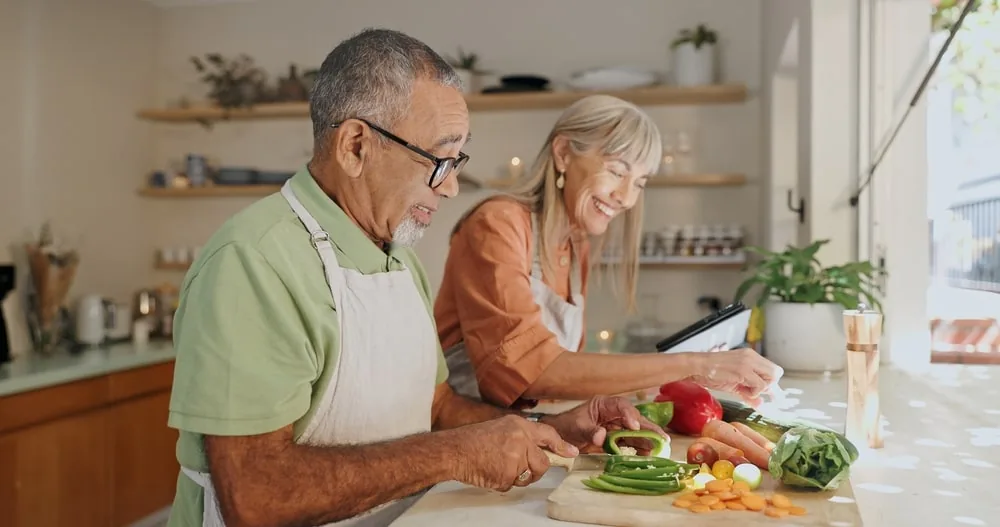
Cooking together in later life is far more than just preparing food. It combines social interaction, cognitive stimulation and emotional fulfilment in a meaningful activity. For older people in particular, preparing meals together can become a valuable ritual that brings joy, evokes memories and helps maintain independence. This guide explores the many aspects of cooking for older people and offers practical tips for a successful experience.
Key Takeaways
- Cooking together can trigger positive emotions, boost self-confidence and serve as a meaningful activity that stimulates both body and mind
- The social aspect of cooking can help prevent loneliness, foster a sense of community and encourage meaningful conversation
- According to scientific studies, cooking could evoke memories and provide cognitive stimulation for people with dementia
- Physical limitations such as reduced hand strength or altered sensory perception require adjustments in the kitchen and during the cooking process
- Safety comes first - dangerous tasks should be carried out by carers, and accessible facilities are essential
- Simple dishes, individual preferences and careful planning make the process easier and prevent people from becoming overwhelmed
The emotional and social significance of cooking
For many people, preparing food has a deep emotional significance. In old age, cooking can become a source of joy and self-esteem. The activity itself, from peeling and chopping to kneading and stirring, exercises dexterity and keeps the body active. The sense of achievement when everyday tasks are successfully completed boosts self-confidence and conveys a feeling of competence and self-efficacy.
Particularly during stages of life that may be characterised by physical or cognitive limitations, cooking offers a welcome change from the daily routine. It creates structure, gives the day a rhythm and enables older people to participate actively in daily life. The positive emotions that arise from cooking together contribute significantly to quality of life.
Cooking as a social activity to combat loneliness
Social isolation is a serious problem in old age. Cooking together and sharing meals afterwards offer an excellent opportunity to maintain social contacts and build new relationships. The shared activity strengthens a sense of community and creates space for conversation, reminiscing and mutual exchange.
Whether in care homes, at neighbourhood gatherings or with family and friends - cooking together brings people together. Scientific research suggests that social participation can have a positive impact on well-being. Activities such as themed cooking days or cooking demonstrations can further foster camaraderie among participants and help combat loneliness in old age.
Cognitive stimulation through familiar activities
The cognitive aspect of cooking is particularly interesting. According to scientific research, the act of cooking could evoke deep memories, particularly in people with dementia or Alzheimer’s. Tasks performed over many years often become automatic and are therefore easier for many older people, leading to a sense of achievement.
Cooking stimulates the mind in many ways. Familiar recipes are recalled from memory, processes must be planned and coordinated, and conversations about traditional dishes and family cooking traditions encourage reflection. Therapeutic activities, such as kneading dough, can also provide sensory stimulation and potentially alleviate feelings of restlessness.
Taking physical changes into account
As people age, motor and sensory functions change, which must be taken into account when cooking together. In the very elderly, reduced hand strength, trembling hands and slower information processing may necessitate a slower pace of work. These natural changes are not an obstacle, but simply require adjustments and patience.
Adaptations for changes in sensory perception
The sense of smell and taste often diminishes with age. This can lead to older people preferring more strongly seasoned foods in order to perceive flavour. When cooking together, this should be taken into account by using fresh herbs and spices generously - but without excessive salt, as this can affect blood pressure.
Eyesight also often deteriorates, which can make working in the kitchen more difficult. Good, glare-free lighting is therefore essential. High-contrast chopping boards and clearly labelled containers make it easier to find one’s way around. Accessible spaces with sufficient room to move about and plenty of seating ensure that even people with limited mobility can cook comfortably.
Nutritional needs in old age
Nutritional needs change over the years. Energy requirements decrease, whilst nutrient requirements remain the same or even increase. A nutrient-rich, balanced diet is therefore particularly important to prevent malnutrition or obesity. When cooking for older people, dishes should therefore be chosen that provide many important nutrients without being too high in calories.
For people with chewing or swallowing difficulties, which can be caused by neurological conditions, for example, soups or puréed foods are often well suited. Even with such adapted textures, enjoyment should remain the priority. An appealing presentation of the food is pleasing to the eye and stimulates the appetite. Furthermore, adequate fluid intake is important - scientific studies suggest that older people should drink at least 1.5 litres a day.
Ensuring safety in the kitchen
Safety is the top priority when cooking with older people. More dangerous tasks, such as frying in hot fat or handling sharp knives, should be carried out by carers or at least closely supervised. In intergenerational cooking projects, it is advisable to practise basic techniques such as the claw grip for safe cutting.
Education on food safety is also important. Older people may be more susceptible to foodborne infections, which is why attention should be paid to hygienic practices, correct storage and ensuring food is heated thoroughly. Non-slip mats, stable work surfaces and easily accessible utensils further contribute to safety.
Accessible kitchen design
A well-thought-out kitchen design makes cooking considerably easier. Height-adjustable work surfaces allow for working whilst seated, which is beneficial for people with limited mobility or who tire easily. Easily accessible cupboards and drawers avoid unnecessary bending or stretching. Ergonomic kitchen aids with thick handles make handling easier for those with limited hand strength.
Modern induction hobs can be a safe alternative to gas or traditional electric hobs, as they only heat up when a pan is placed on them and cool down more quickly. Timers and automatic shut-off functions also contribute to safety. Anyone planning barrier-free living in later life should design the kitchen accordingly from the outset.
Planning and preparing for cooking together
Good planning is the key to a successful cooking experience. To avoid becoming overwhelmed, simple dishes should be chosen that do not require too many steps. Your own workload should be realistically assessed so that there is enough time for breaks and conversation.
Taking individual preferences into account
The individual wishes and preferences of older people should definitely be taken into account. Traditional dishes that evoke memories are often particularly popular. At the same time, new recipes can also be appealing, provided they are not too exotic or complicated. A printed recipe that is read through together helps with orientation and actively involves the participants in the process.
It is advisable to plan tasks in advance and assign plenty of simple activities. Peeling vegetables, mixing sauces or decorating dishes are tasks that can be carried out easily even with limited motor skills. It is important that everyone involved feels they are making a valuable contribution.
Cooking with people with dementia
When cooking with people with dementia, their individual form on the day is crucial. Everyday tasks may sometimes succeed and sometimes not, which is completely normal. The group size should be kept small, as people with dementia require special attention - scientific studies suggest that a group size of three participants is often appropriate.
It is helpful to bring calm to the group when needed and to patiently explain the function of cooking utensils or modern appliances. Clear, simple instructions and visual aids aid understanding. Cooking together can become a regular, joyful routine that provides structure and orientation. Anyone interested in the link between cognitive changes and quality of life will find further information on the topic of well-being in old age.
Intergenerational cooking
Cooking with different generations offers valuable experiences for everyone involved. Older people can pass on their knowledge, experience and tried-and-tested kitchen tips, whilst younger people can contribute new dishes, modern preparation methods or international recipes. This exchange enriches both sides and promotes mutual understanding.
Such projects can foster close bonds resembling a grandparent-grandchild relationship. It is important that older participants give younger ones enough time to experiment, whilst the younger ones respect the older participants’ slower pace. Mutual appreciation and patience are the foundations for a successful intergenerational cooking experience.
Suitable dishes and preparation methods
Choosing the right dishes and preparation methods is key to success. Suitable cooking methods for older people are those that preserve nutrients and aid digestion. Steaming is a gentle method that retains vitamins. Roasting brings out flavours without requiring much fat. Quick frying preserves the texture of vegetables and meat, whilst puréeing can be helpful for those with chewing difficulties.
Traditional recipes reimagined
Traditional dishes are very popular with many older people and can evoke memories of the past. These old recipes, which are often regional, seasonal and traditional, can serve as a basis and be adapted with modern, health-conscious alternatives. Instead of heavy cream sauces, for example, yoghurt or puréed vegetables can be used.
Examples of recipes that combine tradition with digestibility include meatloaf with vegetable couscous, steamed trout with fennel and carrots, or a Mediterranean potato salad. Meals should provide a balanced mix of carbohydrates, proteins and healthy fats. Nutrient-rich foods such as dark leafy vegetables, oily fish, pulses and wholemeal products are particularly valuable.
Book projects and recipe collections
Book projects that collect favourite recipes from older people in care homes bring the emotional enjoyment of food back into focus. These collections preserve culinary heritage whilst offering practical inspiration for communal cooking. The recipes often tell stories from the past, thus linking cuisine with personal history.
Concepts for communal cooking and dining
Many care homes are developing innovative catering concepts designed to transform eating from a mere cost factor into a culinary experience and a source of emotional enjoyment. The aim is to make the kitchen a key element in shaping the home’s image, creating quality of life and a welcoming atmosphere.
Open lunch tables and neighbourhood gatherings
In addition to group cooking, there are initiatives such as open lunch tables in social care facilities or neighbourhood dining schemes that promote social participation and balanced meals. These services are aimed at both residents of care homes and older people who still live independently.
Such community initiatives combat loneliness, encourage social interaction and ensure that elderly people living alone also have access to balanced, hot meals. The social aspect is just as important as the nutritional aspect. Regular meetings create routines and give structure to daily life.
Practical tips for implementation
A few practical tips are helpful for successfully organising communal cooking sessions with older people. Firstly, sufficient time should be set aside. Rushing and time pressure have a negative effect on the atmosphere and can lead to stress. It is better to start with a simple dish and gradually increase the complexity.
The atmosphere should be relaxed and friendly. Background music can lift the mood, but should not be too loud so that conversation remains possible. Regular breaks for rest and a chat are important. Tasting the food together whilst cooking is fun and part of the experience.
Shopping and preparation
If possible, shopping for ingredients together can also be part of the activity. A trip to the market or supermarket provides additional stimulation and exercise. Alternatively, ingredients can be bought in advance and prepared so they are ready to hand, which simplifies the process.
Difficult preparation steps, such as peeling hard vegetables or mincing meat, can be done in advance. This allows older people to focus on the creative and enjoyable aspects of cooking without having to struggle with physically demanding tasks.
The role of nutrition in health as we age
A balanced diet is particularly important in old age. It supports the immune system, maintains muscle mass and bone density, and, according to scientific studies, can reduce the risk of various diseases. Cooking together offers an excellent opportunity to promote healthy eating habits whilst also fostering a love of food.
It is important that meals are varied and cover all the key nutrient groups. Fruit and vegetables provide vitamins and fibre, whole grains provide long-lasting energy, proteins from meat, fish, eggs or pulses maintain muscle mass, and high-quality fats from nuts or vegetable oils support many bodily functions.
Frequently asked questions about cooking for older people
Which dishes are particularly suitable for cooking together with older people?
Traditional dishes that evoke memories, as well as simple recipes with few steps, are particularly suitable. Stews, bakes, steamed vegetables with fish or meat, and classic desserts are popular options. It is important that the dishes can be adapted to accommodate any difficulties with chewing or swallowing.
How can people with dementia be involved in cooking?
With people with dementia, it is important to take their daily form into account and form small groups. Simple, repetitive tasks such as stirring, kneading or sorting ingredients can have a calming effect. Clear instructions, visual aids and patience are crucial. Cooking should become a fixed routine that provides a sense of structure.
What safety measures are important when cooking with older people?
Dangerous tasks such as handling hot oil or sharp knives should be carried out by carers. Non-slip mats, good lighting, accessible premises and ergonomic kitchen aids improve safety. Training in basic cooking techniques and education on food hygiene are also important.
How does cooking together promote social participation in old age?
Cooking together creates opportunities for conversation, sharing memories and building relationships. It combats loneliness and social isolation. The shared activity strengthens a sense of community and gives older people the feeling of being needed and making a valuable contribution.
What adjustments are necessary when sensory perceptions change in old age?
If the sense of taste and smell is declining, dishes should be made more aromatic with fresh herbs and spices, but without excessive salt. Good lighting, high-contrast kitchen utensils and clear labelling help with impaired vision. Sufficient seating and a comfortable room temperature contribute to well-being.