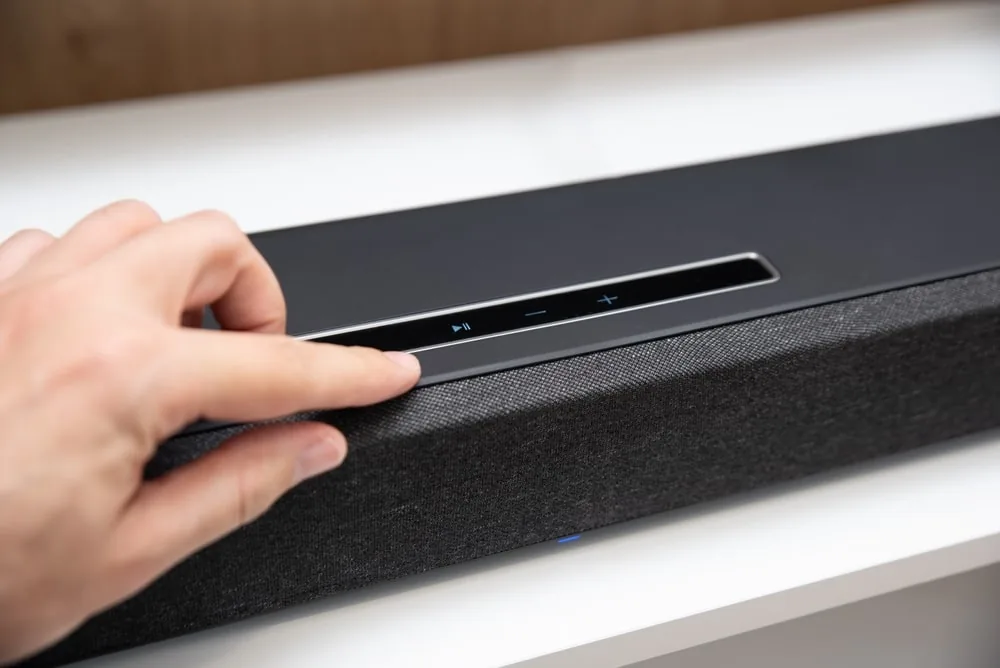
When it comes to creating an impressive home cinema or living room experience, sound plays just as important a role as the picture. An excellent TV delivers brilliant images, but it is only a suitable soundbar with the right audio formats that truly brings films, series and music to life. Choosing the right soundbar audio formats is key to determining just how immersive and detailed the sound experience will ultimately be. It’s not just about volume, but about the ability to place sounds precisely within the room, make subtle nuances audible and create an atmosphere that transports you right into the heart of the action. With the right technology, you can achieve a sound experience that goes far beyond what conventional TV speakers can offer.
Key Takeaways
- Soundbar audio formats determine the sound quality, immersion and spatial reproduction of films, series and music
- PCM offers uncompressed audio quality, whilst Dolby Digital and DTS Digital Surround are established surround sound standards
- Object-based formats such as Dolby Atmos and DTS:X enable 3D sound with overhead effects for maximum immersion
- DTS Virtual:X simulates 3D effects without additional ceiling speakers, ideal for compact soundbars
- Bluetooth codecs such as aptX, aptX HD and LDAC significantly improve wireless music transmission
- HDMI eARC is essential for the full transmission of high-resolution audio formats such as Dolby Atmos
Understanding digital sound processing
Before we delve into the specific soundbar audio formats, it is helpful to understand the basic principles of digital sound processing. Audio is digitised so that it can be stored, transmitted and processed. This is achieved by converting analogue sound waves into digital data.
PCM: clarity in its purest form
PCM (Pulse Code Modulation) forms the basis of many digital audio formats. It is a method for digitally representing analogue signals. Put simply, the amplitude of an analogue signal is sampled at regular intervals and the respective value is stored as a number. PCM audio is uncompressed, which means that no information is lost. This results in very high sound quality, as the audio signal is reproduced faithfully. It is often the format into which other compressed audio formats are ultimately decompressed for playback.
The importance of sampling rate and bit rate for sound quality
The sampling rate indicates how often per second an analogue audio signal is digitised. A higher sampling rate means that more information about the original signal is captured, resulting in a more precise and detailed digital representation. Typical sampling rates range from 44.1 kHz (as with audio CDs) up to 192 kHz for high-resolution audio. The bitrate, on the other hand, describes the amount of data used per second to reproduce the audio signal. A higher bitrate means that more information is transmitted per unit of time, which also leads to better sound quality, particularly with compressed formats, as less information needs to be omitted.
Surround sound formats for an immersive listening experience
Surround sound formats are designed to create an immersive listening experience by reproducing sounds not only from the front, but also from the sides and sometimes even from behind. This contributes significantly to creating a home cinema feel.
Dolby Digital
Dolby Digital is one of the most widely used audio formats for surround sound. It is a compressed format that enables multi-channel audio to be stored and transmitted efficiently. Typically, Dolby Digital supports 5.1 channels (left front, centre, right front, left surround, right surround and a subwoofer channel for low frequencies), which provides a solid foundation for a spatial sound experience in the living room. It is frequently used on DVDs and Blu-rays, as well as in digital TV broadcasts, and offers a significant improvement over stereo sound.
Dolby Digital Plus
Dolby Digital Plus is an evolution of Dolby Digital that enables a higher bitrate and thus improved audio quality. It is particularly popular in the streaming sector, as it combines efficient compression with high sound quality. It supports a greater number of audio channels, up to 7.1 channels, and often forms the basis for more advanced formats such as Dolby Atmos by providing additional metadata for object-based sound. This makes it an ideal format for modern content from the internet.
DTS Digital Surround
DTS Digital Surround is another established compressed multi-channel audio format that frequently competes with Dolby Digital. It also offers 5.1-channel sound and is often appreciated by audiophiles for its detailed and dynamic sound reproduction. Some users find the DTS sound more open and clear, though this often depends on individual listening perception and the audio setup. It is also found on many DVDs and Blu-rays and provides an excellent foundation for an impressive surround sound experience.
DTS Neural:X
DTS Neural:X is not a standalone codec, but rather an upmixing technology. It can analyse stereo or conventional surround sound content and convert it into an object-based or enhanced surround format. This means that even older content not natively available in 3D audio can offer a significantly more spatial and immersive sound experience with the help of DTS Neural:X. It generates additional channels, including height channels, to simulate a more comprehensive surround sound experience, even if the original source does not contain this information. This is particularly beneficial for achieving the best sound quality from all types of media.
Dolby Digital
Dolby Digital is one of the most widely used audio formats for surround sound.
Dolby Digital Plus
Dolby Digital Plus is an evolution of Dolby Digital that enables a higher bitrate and thus improved audio quality.
DTS Digital Surround
DTS Digital Surround is another established compressed multi-channel audio format that often competes with Dolby Digital.
DTS Neural:X
DTS Neural:X is not a standalone encoding format, but rather an upmixing technology.
Object-based audio formats: The step into the third dimension of sound
The development of audio formats has not been limited to the number of channels, but also to the way in which sounds are positioned in space. Object-based audio formats enable a more precise and dynamic placement of sound elements, creating an even more immersive listening experience.
Dolby Atmos
Dolby Atmos has revolutionised the world of home cinema by adding a third dimension of sound: height. Unlike channel-based formats, which assign sounds to specific speakers, Dolby Atmos treats individual sound elements (objects) as independent entities that can be dynamically placed in three-dimensional space. This means a helicopter can fly overhead, and rain can seem to fall from above. This is achieved through additional ceiling speakers or upward-firing speakers in a soundbar, which project sound towards the ceiling, from where it is then reflected back to the listener. Dolby Atmos thus creates a truly immersive sound experience that draws the listener right into the action and makes every listening experience something special.
DTS:X
DTS:X is Dolby’s counterpart to Atmos and also offers object-based 3D sound. A key advantage of DTS:X is its flexibility: it is not tied to a fixed number of speaker channels and can adapt dynamically to the existing speaker configuration. This means that filmmakers position sounds not for specific channels, but as objects, which the audio system then reproduces according to the available speaker setup. This adaptability enables a bespoke sound experience that adapts perfectly to the conditions of the room in question. Both DTS:X and Dolby Atmos offer an outstanding immersive listening experience and are essential for modern home cinema.
DTS Virtual:X
Not everyone wants to or is able to install ceiling speakers to enjoy 3D sound. This is where DTS Virtual:X comes in. This technology simulates a three-dimensional sound experience, including overhead effects, without the need for additional ceiling speakers or special up-firing speakers. DTS Virtual:X uses advanced algorithms to manipulate the sound so that it appears to come from above or from the sides, even if the soundbar itself has only a limited number of channels. This makes it an excellent solution for compact soundbar systems that are still intended to convey a sense of surround sound and immersion and deliver a compelling audio experience.
Wireless audio transmission, high-fidelity sound without cables
The ability to transmit audio wirelessly offers enormous flexibility when setting up and using a soundbar. Modern Bluetooth technologies have significantly improved the sound quality of wireless connections.
aptX
aptX is an audio codec that enables music to be streamed via Bluetooth at a significantly higher quality than the standard Bluetooth codec (SBC). It reduces the data volume through more efficient compression without causing any noticeable loss in sound quality. The result is a clearer, more detailed and dynamic sound that comes closer to that of a wired connection. For music lovers who want to stream their music from smartphones or tablets to the soundbar, aptX is an important feature that noticeably improves the listening experience.
aptX HD
aptX HD goes one step further than standard aptX. It is designed to transmit high-resolution audio via Bluetooth, enabling an even higher bitrate and thus even better sound quality. With aptX HD, audio files can be transmitted at up to 24-bit/48 kHz, allowing for significantly more precise and detailed playback. For users who value every detail and virtually lossless wireless transmission, aptX HD is an excellent choice. It takes the listening experience to a new level, even without cables.
LDAC
LDAC is another high-quality audio codec for Bluetooth transmission, developed by Sony. It stands out because it supports an even higher data rate than aptX HD, namely up to 990 kbps. This enables the transmission of high-resolution audio at up to 24-bit/96 kHz, which comes very close to the sound quality of wired connections. LDAC is particularly popular with audiophiles who want to enjoy their Hi-Res audio collections via Bluetooth in the best possible quality without having to sacrifice the freedom of a wireless connection.
Key connections and technologies for soundbar audio formats
The connection between the TV and the soundbar is crucial for transmitting audio formats in the best possible quality. Different connections offer different options and features.
HDMI and HDMI eARC/ARC
HDMI is the standard connection for modern AV devices and transmits both picture and sound digitally. Particularly important for soundbars is HDMI ARC (Audio Return Channel) or, even better, HDMI eARC (enhanced Audio Return Channel). HDMI ARC enables the TV to send audio signals back to the soundbar, meaning that only one HDMI cable is required for picture and sound between the TV and the soundbar. HDMI eARC is an enhanced version of ARC and offers significantly higher bandwidth. This is crucial for the transmission of uncompressed and high-resolution audio formats such as Dolby Atmos and DTS:X, as these formats require a large amount of data. With eARC, you can ensure that your soundbar receives the full sound quality of the latest audio formats.
Bluetooth
Bluetooth enables a straightforward wireless connection between the soundbar and various devices such as smartphones, tablets or laptops. It is ideal for streaming music quickly and easily to the soundbar without having to use cables. Whilst standard Bluetooth codecs may involve some compression, technologies such as aptX, aptX HD and LDAC significantly improve sound quality during wireless transmission, as mentioned earlier. This makes Bluetooth a flexible and convenient option for everyday music enjoyment.
Optical and coaxial connections
Optical (TOSLINK) and coaxial digital connections are tried-and-tested alternatives to HDMI, particularly for older televisions or where HDMI ARC/eARC is not available. Both connection types transmit digital audio signals and can handle surround sound formats such as Dolby Digital and DTS Digital Surround. They provide a reliable connection for the soundbar, but may have bandwidth limitations compared to HDMI eARC, which can restrict the transmission of high-resolution or object-based audio formats such as Dolby Atmos and DTS:X. However, they are a good choice for basic surround sound requirements.
Choosing the right soundbar for your preferred audio formats
Choosing the right soundbar depends heavily on the audio formats you wish to use and your personal listening habits. First, consider what content you mainly consume: is it predominantly films and TV series with the latest 3D audio effects such as Dolby Atmos and DTS:X, or do you listen to a lot of music via streaming services? Make sure the soundbar is compatible with your preferred audio formats. For example, a soundbar that supports eARC is essential for receiving the full range of Dolby Atmos and DTS:X from your TV.
The size of your living room and the room acoustics also play a role. In larger rooms, a soundbar with more channels or a combination of a soundbar and separate rear speakers may be more suitable for creating a comprehensive surround sound experience. For smaller rooms, a soundbar with DTS Virtual:X can already deliver a compelling sound experience. Also consider which connections your TV has to ensure an optimal connection to the soundbar. Ultimately, it is a personal choice based on your needs and preferences, but with knowledge of the various soundbar audio formats, you can make an informed decision and significantly enhance your listening experience.
Comparison table of audio formats
| Audio format | Description & Features | When is it useful? |
|---|---|---|
| PCM | Uncompressed digital audio format that reproduces the original sound information without loss. The quality depends on the sampling rate and bit rate. Requires high bandwidth. | When the highest, unadulterated sound fidelity is a priority and the playback devices (e.g. Blu-ray players, games consoles) are connected directly to the soundbar or the TV supports eARC. Ideal for audiophiles and pure music playback. |
| Dolby Digital | A widely used, compressed multi-channel audio format (typically 5.1 channels). Offers a good sense of spatiality with an efficient data rate. | The standard for film and TV content (DVDs, older Blu-rays, digital TV broadcasts). If your soundbar and TV support ARC but not eARC, this is a solid compromise for room-filling sound. Also highly relevant for older home cinema setups. |
| Dolby Digital Plus | An evolution of Dolby Digital with a higher bitrate and support for up to 7.1 channels. Efficient for streaming services and often the basis for Dolby Atmos metadata. | Ideal for streaming services (Netflix, Amazon Prime Video, etc.) that use this format for better surround sound. If you already have a soundbar with ARC that can decode Dolby Digital Plus, it’s an upgrade from Dolby Digital, particularly for online content. |
| DTS Digital Surround | An alternative to Dolby Digital, also a compressed 5.1-channel format. Often found on Blu-rays. Perceived by some as more dynamic and detailed. | If you own a soundbar that supports DTS formats and you watch Blu-rays with DTS audio tracks. Many home cinema enthusiasts prefer DTS sound for its specific characteristics. |
| DTS Neural:X | Upmixing technology that analyses stereo or conventional surround content and converts it into a more immersive, object-based or enhanced surround format. | If you want to enjoy older films, series or music in stereo or ‘just’ 5.1 surround sound, but still want to achieve a more spatial and impressive sound experience without the original source being available in 3D audio. Gets more out of non-3D-compatible content. |
| Dolby Atmos | Object-based 3D audio format that positions sounds as "objects" in three-dimensional space, including height effects. Requires an eARC connection for full quality. | If you’re looking for the ultimate, immersive sound experience for films and TV series, and your soundbar and TV are eARC-compatible. Ideal for modern Blu-rays, 4K UHD Blu-rays and streaming services offering Atmos content. Gives you the feeling of being right in the middle of the action. |
| DTS:X | Object-based 3D audio format, similar to Dolby Atmos, but more flexible in terms of speaker configuration. Dynamically adapts the sound to the existing setup. Also requires eARC. | If you prefer a flexible and powerful 3D audio solution and your soundbar and TV are eARC-compatible. DTS:X is also found on many Blu-rays and 4K UHD Blu-rays and offers a comparable, often slightly different yet equally impressive 3D sound experience. |
| DTS Virtual:X | Technology that simulates a virtual 3D sound experience (including height effects) without the need for physical height speakers. Uses algorithms to spatially map the sound. | If you want to enjoy 3D sound effects (particularly height effects) without physical ceiling speakers or up-firing speakers. Ideal for compact soundbars and smaller rooms where a full 3D Atmos/DTS:X setup is not possible or desired, but where a more immersive experience is still required. |
| aptX | A Bluetooth codec that offers higher audio quality than the standard Bluetooth codec (SBC) by compressing data more efficiently. | If you want to stream music wirelessly from your smartphone or tablet to the soundbar and value improved sound quality over standard Bluetooth. The soundbar and source device must support aptX. |
| aptX HD | An evolution of aptX, enabling the wireless transmission of high-resolution audio (up to 24-bit/48 kHz) via Bluetooth. Further reduces compression loss. | If you want to stream music in higher resolution wirelessly and both your soundbar and your source device support aptX HD. Offers even more detailed and clearer wireless playback for audiophile standards. |
| LDAC | High-quality Bluetooth codec from Sony that supports very high data rates (up to 990 kbps) and enables the transmission of Hi-Res audio (up to 24-bit/96 kHz) via Bluetooth. | If you own Hi-Res Audio files and want to stream them to your soundbar via Bluetooth in the best possible wireless quality. Ideal for audiophiles who do not want to compromise on wireless audio quality and have suitable source devices (e.g. Hi-Res players, compatible smartphones). |