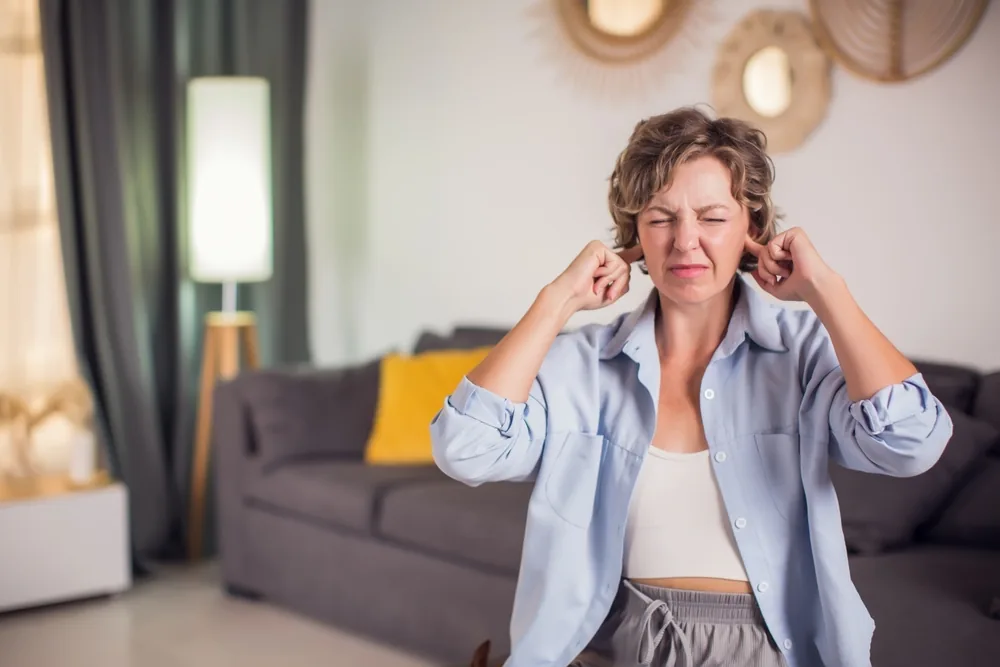
A popping balloon, a firecracker, an ambulance siren: there are sounds that can be literally “frightening”. But after a brief moment of shock, most people have already forgotten them.
However, there are people for whom such sounds - or similar ones - are far worse. Even the thought of them can fill them with great fear, as they suffer from phonophobia.
Key Takeaways
- What is phonophobia?
- Phonophobia, misophonia and hyperacusis
- Symptoms of phonophobia
- Causes of phonophobia
- Trigger sounds: the triggers of phonophobia
- Social and psychological consequences of phonophobia
What is phonophobia?
Phonophobia, also known as ligyrophobia or sonophobia, refers to the fear of certain sounds. The term originates from Greek and can be roughly translated as ‘fear of sounds’ (phono = sound, phobos = fear).
Phonophobia is a very rare anxiety disorder that often results from sensitivity or hypersensitivity to sound, or from other psychological disorders, for example.
When sufferers hear a particular sound, they usually experience intense anxiety, which can escalate to panic attacks. Typical triggers can include noise or loud bangs. Often, though not exclusively, these are loud noises.
Phonophobia, misophonia and hyperacusis
Whilst misophonia manifests itself in those affected as anger, hatred or disgust towards certain sounds, phonophobia is a panic-like fear of them. Phonophobia is therefore sometimes regarded as an extreme form of misophonia.
Furthermore, phonophobia is often associated with hyperacusis, or even regarded as a symptom of it. Hyperacusis refers to a pathological sensitivity to sound or hypersensitivity to noise.
Symptoms of phonophobia
As with many conditions, the symptoms of phonophobia can vary greatly depending on the individual and the severity of the disorder.
The most common symptoms include a sometimes overwhelming feeling of anxiety, accompanied by palpitations, trembling and sweating, and sometimes even panic attacks.
These symptoms occur as soon as the person affected hears a particular sound or even just anticipates it.
Causes of phonophobia
The causes of phonophobia also vary greatly. Among other things, so-called noise trauma - that is, traumatic experiences involving loud noises - can lead to phonophobia.
Furthermore, phonophobia can develop as part of an anxiety disorder and hyperacusis, i.e. hypersensitivity to sound. Genetic predisposition may also play a role.
Trigger sounds: the causes of phonophobia
People who suffer from phonophobia are afraid of certain sounds or of being exposed to them. These do not always have to be excessively loud noises; they are usually everyday sounds that people without an anxiety disorder would consider completely normal. Nevertheless, those affected often perceive them as harmful to their health or threatening.
Just as the symptoms and causes vary widely, so too do the triggers of phonophobia. Below are a few examples of these trigger sounds:
- Sirens
- Fireworks
- Vacuum cleaner noises
- Car horns
- Babies crying
- Telephone rings
- Doorbells
- Loud conversations
- Construction site noise
- Loud music
Social and psychological consequences of phonophobia
Phonophobia is not only extremely distressing for those affected at the moment of fear, but often beyond that as well. As a result, people with phonophobia may try to avoid the frightening noises and situations in which they might occur at all costs. Since, as the examples above show, these are often everyday noises, social isolation is sometimes the result.
Withdrawal from daily life, social contact and public events, etc., can lead to further psychological consequences, including anxiety and depression.
Treatment: Therapies for phonophobia
As with other anxiety disorders, treatment for phonophobia is usually preceded by a precise diagnosis by a doctor or psychotherapist. Together with the patient, they decide on a suitable treatment method.
Possible therapies for phonophobia include, for example, cognitive behavioural therapy, which aims to change behaviour through targeted modification of thought patterns and behaviours.
Sound therapies can also be helpful for phonophobia. Here, for example, patients learn to gradually get used to certain sounds in order to reduce their sensitivity to noise. In some cases, the
use of medication may also be appropriate.