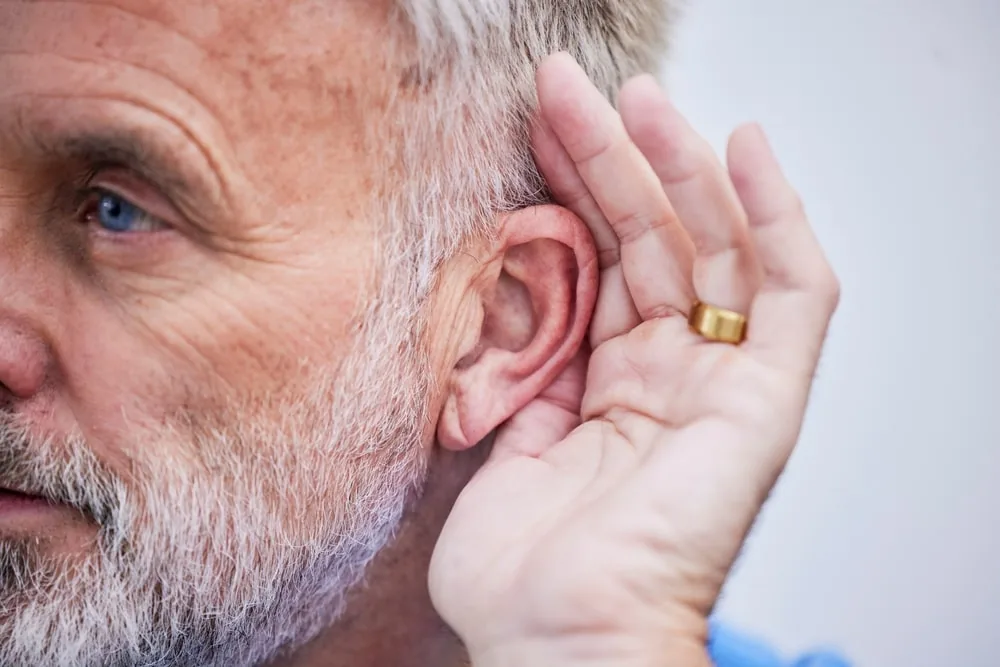
Hearing loss can develop gradually and significantly affect quality of life. Many people do not notice the early signs or put them down to old age. However, early detection and prompt treatment are crucial to minimising the effects of hearing loss. This comprehensive guide explains why people experience hearing loss, what the warning signs are, and what modern treatment options are available.
Key Takeaways
- Early warning signs of hearing loss
- How hearing works
- Causes of hearing loss
- Understanding types of hearing loss
- The path to diagnosis
- Modern treatment options
Key points at a glance
- Hearing loss usually develops gradually and is often only noticed at a late stage
- Common causes include age-related hearing loss, noise, infections and certain medications
- Early signs include difficulty understanding speech in noisy environments and the need to turn up the volume on the TV and radio
- Early diagnosis by ENT specialists is important to prevent the ‘forgetting of hearing’
- Modern hearing aids are digital mini-computers that specifically amplify the required frequencies
- Untreated hearing loss can lead to social isolation, stress and depression
Early warning signs of hearing loss
The signs of early hearing loss are often subtle and easily overlooked. Those affected initially notice difficulties understanding conversations in noisy environments, such as restaurants or family gatherings. The voices of those they are talking to seem muffled or incomprehensible, even though the general volume seems normal. Frequently asking people to repeat themselves becomes a habit. Another clear warning sign is when family members or neighbours complain that the television or radio is too loud. Many people do not realise themselves that they have to keep turning up the volume to understand dialogue and music. At the same time, natural everyday sounds such as birdsong, the ticking of a clock or the ringing of the telephone are heard less and less frequently.Social and emotional effects
The constant effort to understand conversations leads to mental fatigue and frustration. The effects of early-stage hearing loss are evident in various areas of life:- Withdrawal from social contact and avoidance of restaurants or family gatherings
- Avoiding social occasions where hearing is particularly challenging
- Development of a vicious circle of frustration, social withdrawal and increasing isolation
- Strained partnerships and family relationships due to communication problems
How hearing works
To understand the various forms of hearing problems, it is helpful to know how the complex mechanism of hearing works. The hearing process is a fascinating interplay of mechanical sound transmission and neurological signal processing.The outer ear as a sound collector
The outer ear acts like a natural funnel, capturing sound waves from the environment and directing them into the ear canal. The ear canal then transmits these waves to the eardrum. Earwax plays an important protective role here, shielding the ear canal from dirt, water and germs.The middle ear as an amplifier
The middle ear contains the three smallest bones in the human body: the malleus, incus and stapes. These ossicles are connected to one another by joints and mechanically transmit the vibrations of the eardrum to the inner ear. In doing so, the middle ear acts as a so-called impedance converter, amplifying the sound waves so that they can effectively set the fluid in the inner ear in motion.The inner ear as a signal converter
The actual conversion of sound waves into nerve impulses takes place in the cochlea, the spiral-shaped inner ear. Thousands of hair cells float in the cochlear fluid and respond to different frequencies. The hair cells at the entrance to the cochlea are responsible for high-pitched sounds, whilst those at the end process low frequencies. When the fluid moves, the hair cells ‘bend’ and convert the mechanical vibrations into electrical signals.The role of the brain
The hearing process does not end with the conversion of signals in the inner ear. The electrical impulses travel via the auditory nerve to the brain, where they are interpreted and linked to other sensory impressions and experiences. The brain classifies the signals as speech, music or specific sounds, thereby enabling conscious hearing.Causes of hearing loss
The reasons for hearing loss are varied and range from simple, treatable problems to chronic conditions. An accurate diagnosis is therefore the first step towards the right treatment.Age-related hearing loss as the most common cause
Presbycusis, as age-related hearing loss is medically termed, is the most common form of hearing loss. It typically develops between the ages of 50 and 60 and affects both ears equally. The main cause lies in the natural wear and tear of the hair cells in the inner ear, which cannot regenerate. A characteristic feature is the initial difficulty in understanding high-frequency sounds and consonants such as f, s, t, p or k, whilst the perception of low-frequency sounds is retained for longer.Noise-induced hearing loss
Noise is one of the most significant preventable causes of hearing loss. Both prolonged exposure to noise levels above 85 decibels and sudden, extreme noises can cause irreversible damage to the sensitive hair cells. Noise-induced hearing loss is the most commonly recognised occupational disease in Germany. People in noisy working environments such as construction sites and factories, as well as musicians and concert-goers, are particularly at risk.Illnesses and infections
Various illnesses can impair hearing. Middle ear infections lead to a build-up of fluid behind the eardrum and hinder sound transmission. Inner ear infections can directly damage the delicate structures of the cochlea. Viral infections such as measles, mumps or meningitis can also cause permanent hearing damage.Medicines and other factors
Various other factors can lead to hearing problems and require special attention:- Ototoxic medications such as certain antibiotics, chemotherapeutic agents and high-dose acetylsalicylic acid
- Genetic factors that can cause congenital hearing loss
- Skull or ear injuries caused by accidents or trauma
- Complications during birth, such as oxygen deprivation during pregnancy or childbirth
- Autoimmune diseases that can affect the inner ear
Understanding types of hearing loss
Medical professionals distinguish between different types of hearing loss depending on the structure affected within the hearing system. This classification is important for the correct diagnosis and treatment.Conductive hearing loss
In conductive hearing loss, the problem lies in the outer or middle ear. Sound cannot be effectively transmitted to the inner ear. Common causes include earwax blockages, middle ear infections, damage to the eardrum, or stiffening of the ossicles in otosclerosis. This form of hearing loss can often be treated medically or surgically.Sensorineural hearing loss
Here, the problem lies in the inner ear or the auditory nerve. Although sound waves reach the inner ear, they cannot be properly converted into nerve impulses. Causes are usually damaged hair cells due to age, noise or illness. This form is generally permanent and incurable, but can be effectively managed with hearing aids or implants.Combined hearing loss
In mixed hearing loss, both sound conduction and sound perception are affected. This complex form requires a personalised treatment strategy that may combine various therapeutic approaches.The path to diagnosis
A professional diagnosis is the most important step in identifying the causes of poor hearing and initiating the correct treatment. The earlier hearing loss is detected, the better the treatment options.The role of the ENT specialist
The ear, nose and throat (ENT) specialist is the first point of contact for hearing problems. They can identify and treat medical causes such as infections, injuries or earwax blockages. In the case of sudden hearing loss, swift action is particularly important, as immediate treatment significantly improves the chances of recovery.The hearing test at the hearing care professional
Hearing care professionals carry out detailed hearing tests and are specialists in the technical provision of hearing aids. Many hearing care professionals offer free hearing tests, which provide an initial assessment of hearing ability. The hearing test is a painless examination in which various tones and frequencies are tested to create an accurate picture of hearing ability.Modern treatment options
The treatment of hearing problems has advanced considerably in recent years. Modern technologies now offer solutions that go far beyond simple volume amplification.Digital hearing aids
Today’s hearing aids are sophisticated digital mini-computers that not only amplify sound but also process it intelligently. They selectively amplify the frequencies that a person can no longer hear well, whilst automatically attenuating distracting background noise. Modern systems can distinguish between speech and background noise and specifically highlight human speech. There are two main types: behind-the-ear (BTE) systems and in-the-ear (ITE) systems. BTE devices are larger and easier to handle, are suitable for almost all degrees of hearing loss and offer a long battery life. ITE systems are smaller and virtually invisible, but are only suitable for mild to moderate hearing loss.Hearing implants for severe cases
When conventional hearing aids are insufficient, various types of hearing implants can help. Bone-anchored hearing systems conduct sound via the skull bone directly to the inner ear, thus completely bypassing the outer and middle ear. In cases of severe inner ear hearing loss, cochlear implants replace the function of the damaged hair cells and stimulate the auditory nerve directly with electrical impulses.Specific medical conditions
Certain specific conditions can lead to characteristic forms of hearing loss and require special attention.Otosclerosis and its characteristics
In otosclerosis, bone structures in the middle and inner ear undergo pathological changes, causing the stapes to become immobile. Those affected experience progressive conductive hearing loss, often accompanied by tinnitus. A unique symptom of otosclerosis is the Paracusis Willisii effect: paradoxically, in noisy environments, those affected seem to hear better, as the signal-to-noise ratio improves due to the muffled background noise.The medical emergency: sudden hearing loss
Sudden hearing loss is a sudden, usually unilateral loss of hearing of unknown cause, often accompanied by tinnitus or vertigo. Swift action is crucial here, as immediate medical treatment with corticosteroid-based medication significantly improves the chances of recovery. Treatment should ideally begin within the first 24 to 48 hours.Psychosocial consequences of untreated hearing problems
Untreated hearing loss has far-reaching consequences that go beyond mere hearing impairment and can affect every aspect of life.The vicious circle of social isolation
Hearing problems lead to communication difficulties, which can cause conflicts in relationships and families. Conversations lose their depth and occur less frequently. The discomfort in group situations reinforces withdrawal from social contact, which can ultimately lead to loneliness and isolation. Independence can also suffer if important auditory information is not perceived in road traffic or in everyday life.Cognitive strain and its consequences
The constant effort to understand sounds and voices creates enormous cognitive stress. This ‘hearing stress’ places a strain on working memory and can lead to physical symptoms such as headaches or chronic fatigue. The stress, combined with communication problems and social withdrawal, can result in psychological consequences such as anxiety, irritability and depression. Research suggests a possible link between untreated hearing loss and cognitive decline, as the increased mental effort can weaken areas of the brain that are also affected by dementia.Prevention and protection of hearing health
Preventive measures can help to preserve hearing in the long term and prevent hearing damage.Effective hearing protection
As noise is one of the most common preventable causes of hearing loss, effective hearing protection is essential. This applies not only in the workplace, but also during leisure activities such as listening to loud music, attending concerts or mowing the lawn. Permanent damage can occur at noise levels as low as 85 decibels.Hearing training as active prevention
Hearing training strengthens auditory perception and memory, enabling better processing of sounds and speech. Effective exercises include recognising everyday sounds, focusing on conversations in groups, and playful activities such as auditory memory games, which are also available via special apps.Diet for hearing health
A balanced diet can also contribute to hearing health. Foods rich in magnesium, zinc and potassium can promote blood circulation and have anti-inflammatory effects. Magnesium in almonds has been shown to prevent noise-induced hearing loss, whilst zinc in black beans can reduce inflammation in the inner ear.Modern hearing aids and technologies
Today’s options for treating hearing problems go far beyond traditional hearing aids and include various technical aids.Assistive hearing technologies
In addition to traditional hearing aids, there is now a wide range of aids for the hard of hearing that can make everyday life considerably easier:- TV audio amplifiers that transmit sound wirelessly directly to the ear
- Special telephones with an amplifier function and visual signals
- Vibrating alarm clocks and doorbell amplifiers for important signals
- Induction loops in public buildings for better understanding
- Personalised FM systems for challenging listening situations