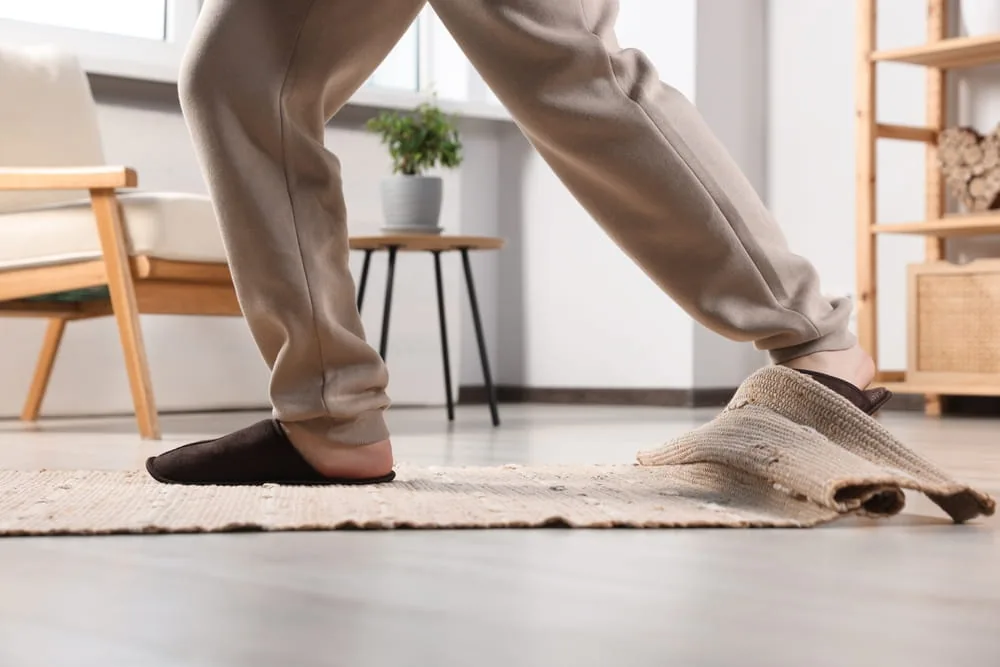
As we get older, the risk of falling in our own homes increases. Things that used to be no problem at all can suddenly become a hazard. Loose rugs, poor lighting or slippery bathroom floors are among the most common causes of accidents. Yet many of the risks of falling in the home can be eliminated with simple measures. Find out which areas are particularly critical and how you can make your home safer.
Why falls are more common in older people
Falls are among the most common causes of accidents in older people. The reasons for this are varied and often relate to natural changes in the body. Understanding these factors can help with targeted prevention.
Physical changes in old age
Over the years, the body changes in various ways. Muscle strength decreases, balance becomes less reliable and reaction times slow down. Vision also deteriorates in many people, making it harder to spot obstacles. Together, these factors can mean that even small bumps or objects on the floor become tripping hazards.
Furthermore, the vestibular system in the inner ear plays a key role in maintaining body stability. Age-related changes in the ear can therefore also affect balance. People with hearing problems should be particularly vigilant, as studies suggest a link between hearing loss and an increased risk of falling.
Medicines and their effects
Certain medications can cause dizziness, light-headedness or tiredness. The risk of side effects that affect balance can increase, particularly when taking several medications at the same time. It may be helpful to have an open discussion with your doctor about possible interactions and side effects that could lead to falls.
Identifying the biggest trip hazards in the home
Many fall hazards are right on your doorstep - or, to be more precise, within your own four walls. A critical look around your home can help identify potential hazards.
Carpets and runners
Loose rugs, raised edges and slipping runners are a classic hazard. Secure them with non-slip underlays.
Cables & objects
Charging cables, extension leads and objects lying in walkways must be avoided.
Door thresholds & edges
High door thresholds and uneven flooring. If possible, remove them or replace them with flat transitions.
Carpets and runners
Loose rugs, raised edges and slipping runners are a classic hazard.
Cables & objects
Charging cables, extension leads and objects lying in walkways must be avoided.
Door thresholds & edges
High door thresholds and uneven flooring.
Lighting as a safety factor
Good lighting is one of the most important factors when it comes to eliminating the risk of falls in the home. If you can see your surroundings clearly, you can spot obstacles in good time.
Sufficient light in all rooms
Every room should have sufficiently bright lighting. Dark corners and poorly lit areas increase the risk of accidents. Good lighting is particularly important in hallways, on stairs and in passageways. Ceiling lights with high light output and additional floor lamps can help to illuminate all areas evenly.
Night lights and motion detectors
The risk of falling is particularly high at night, for example when going to the toilet. Night lights that illuminate the path can be a great help here. Even more practical are motion sensors that automatically switch the light on as soon as someone enters the room. These are now easy to retrofit and often run on batteries.
Light switches in the right places
Light switches should be easily accessible, ideally right by the entrance to each room. Anyone who has to search for a switch in the dark risks a fall. Illuminated switches or glow-in-the-dark stickers can make them easier to find in the dark.
Making the bathroom safe
The bathroom is one of the rooms in the home where the risk of falling is highest. Wet tiles, confined spaces and getting in and out of the shower or bath pose significant risks.
Non-slip mats and rugs
Non-slip mats in the shower, in the bath and in front of the washbasin are essential safety measures. These mats should adhere firmly to the floor with suction cups. Non-slip mats on the bathroom floor itself can also help prevent slips on wet tiles.
Grab rails and support devices
Grab rails on the bath, in the shower and next to the toilet provide support when sitting down and standing up. They should be firmly anchored to the wall and able to support body weight. Various models are available from specialist retailers, some of which can be retrofitted.
Shower seat and bath lift
A shower seat allows you to sit down whilst showering, thereby significantly reducing the risk of falls. For bath users, a bath lift can make getting in and out easier. These aids are particularly useful for people with limited mobility or balance problems.
Stairs, furniture and the right footwear
Securing stairs and steps
Stairs should be fitted with sturdy handrails on both sides. Contrast strips on the edges of the steps make them easier to spot. Non-slip surfaces prevent slipping. If climbing stairs becomes too dangerous, a stairlift can be a safe alternative.
Rethinking furniture and furnishings
Furniture should be arranged to create sufficiently wide passageways. Sturdy chairs and armchairs with armrests make it easier to stand up. A TV armchair with a stand-up aid can be a comfortable solution. Frequently used items should be stored at an easily accessible height.
The right footwear indoors
Socks on slippery floors are a common cause of falls. Slippers with non-slip, sturdy soles offer significantly better grip. It is important that the shoes fit well. Open slippers without heel straps should be avoided, as they can easily slip off the feet.
Aids and active prevention
Aids for greater mobility and safety
Various aids can help you move around the home more safely. A walking stick or rollator can provide additional stability. Hip protectors can reduce the risk of hip fractures in the event of a fall. A home emergency call system, worn as a bracelet or necklace, can be life-saving in an emergency.
Prevention through exercise and training
In addition to adapting the home environment, physical fitness also plays an important role. Regular exercise can strengthen muscles and improve balance. Simple exercises such as standing on one leg or targeted strength training for the legs and core are very effective. As both sight and hearing are important for orientation, both senses should be checked regularly. Up-to-date glasses and, where necessary, aids for the hard of hearing contribute to safety.
Checklist for a fall-proof home
| Area | Sources of danger | Measures |
|---|---|---|
| Entrance area | Slippery mats, poor lighting, shoes left lying around | Non-slip mats, good lighting, designated places for shoes |
| Living areas | Loose cables, slipping rugs, dark corners, wobbly furniture | Secure cables, fix carpets in place, ensure adequate lighting, use sturdy furniture |
| Kitchen | Slippery floors, spilled liquids, hard-to-reach cupboards | Non-slip flooring, wipe up spills immediately, store essential items at arm’s reach |
| Bathroom | Wet tiles, high step into shower/bath, no support when standing up | Non-slip mats, grab rails, shower seat or bath lift |
| Bedroom / Night-time trips | Darkness on the way to the toilet, trip hazards by the bed | Install night lights or motion sensors, keep pathways clear |
| Stairs / Steps | Missing handrails, poorly visible step edges, slippery surfaces | Handrails on both sides, mark steps, fit anti-slip strips |
Eliminating the risk of falls in the home is not a one-off task, but an ongoing process. Regular checks and, where necessary, adjustments to changing needs help to ensure your home remains safe in the long term.