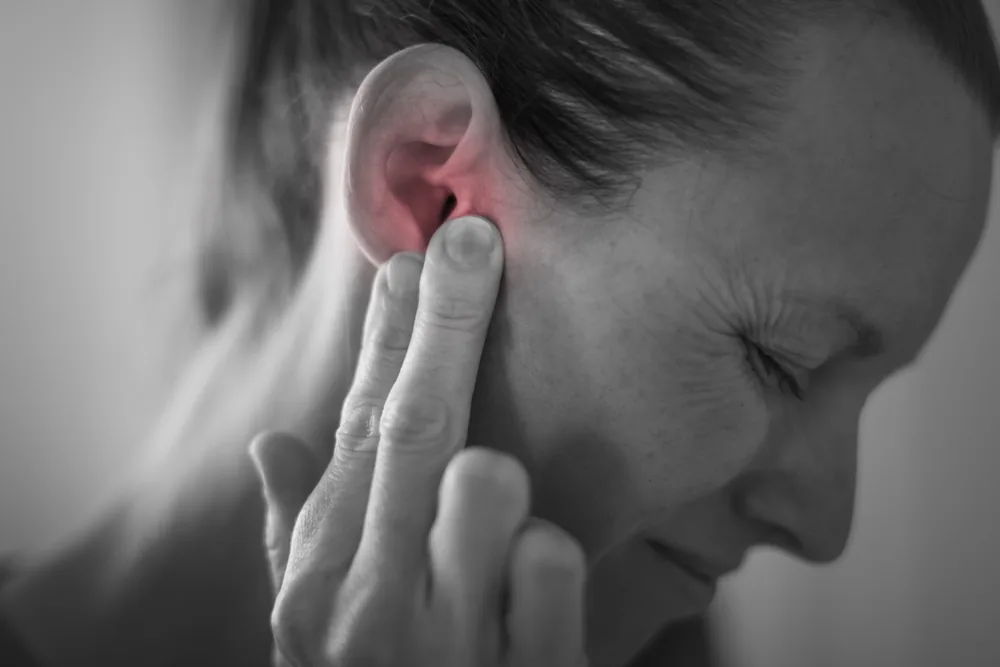
Anyone who has ever heard a real gunshot or cannon blast, experienced an airbag deploying, or stood too close to an exploding New Year’s Eve firecracker knows this: there are sounds that hurt your ears. And not only that: some of these loud, sudden noises can actually cause significant damage to the ear. It takes just a few milliseconds for this to happen.
Below, you can find out more about so-called ‘acoustic trauma’, from causes and symptoms to treatment and prevention.
Key Takeaways
- What is acoustic trauma?
- Typical high-risk noises and causes of acoustic trauma include, for example:
- Symptoms: How to recognise acoustic trauma
- Consequences and long-term effects of acoustic trauma
- Diagnosis of acoustic trauma: When to see a doctor?
- Treatment of acoustic trauma
What is acoustic trauma?
Acoustic trauma, or noise-induced trauma, is a physical injury or damage caused by noise. In acoustic trauma, the hair cells in the inner ear are damaged because very high sound pressure acts on the ear for a very short time, i.e. for approx. 1 to 3 milliseconds. In contrast, prolonged exposure to excessively high sound pressure damages the eardrum and the ossicles.
Noises capable of causing acoustic trauma are at least 140 decibels (dB) loud. By way of comparison: people perceive noises between 40 and 65 decibels as normal or pleasant. From a volume of around 80 decibels, we already speak of noise.
Typical high-risk noises and causes of acoustic trauma include, for example:
- a gunshot
- a New Year’s Eve firecracker
- an airbag deploying
- a bursting tyre
- a slap
- Loud noises on building sites
- a nearby lightning strike
These noises generate such high sound pressure that they damage the hair cells in the so-called organ of Corti, the actual hearing organ in the inner ear. As a result, those affected suffer hearing loss, often in the high-frequency range.
Symptoms: How to recognise acoustic trauma
Noise trauma can be either acute or chronic. Whilst chronic noise trauma is usually caused by prolonged and regular exposure to noise, and often results in permanent hearing loss, acoustic trauma is an acute form of noise trauma triggered by a very brief but extremely loud sound. Following the loud bang, the following symptoms may occur, amongst others:
- Earache
- a sensation of “cotton wool in the ear”
- Tinnitus/ringing in the ears (whistling, hissing)
- Hearing damage
- Hyperacusis (sensitivity to sound)
- Hearing loss
- Dizziness, balance problems
In the case of mild acoustic trauma, most symptoms usually disappear after a short time. In the case of severe acoustic or noise trauma - that is, when the hair cells in the inner ear have been severely damaged - hearing damage that is sometimes irreversible may occur, such as tinnitus or permanent hearing loss.
Blast trauma or explosion trauma
There are various types of so-called acoustic trauma. These include acoustic trauma, noise trauma and blast trauma.
Whilst acoustic trauma is usually caused by a short, loud bang and the symptoms typically occur as described above, blast trauma often results in damage or injury to the eardrum due to a very loud, prolonged noise. This can result in combined hearing loss, where both sound conduction and sound perception are impaired. This may also occur or worsen some time after the noise event.
Noise-induced trauma, on the other hand, occurs when people are exposed to long-term or persistent noise. It is a typical occupational disease that can lead to hearing loss over time.
Consequences of acoustic trauma and long-term effects
In many cases, acoustic trauma may improve or disappear. However, it can also damage the hair cells in the inner ear to such an extent that the trauma can no longer be treated.
Possible consequences or long-term effects of acoustic trauma include ringing in the ears or tinnitus, hearing impairment and hearing loss.
Diagnosis of acoustic trauma: When to see a doctor?
It is important that you consult an ENT specialist if you experience typical symptoms of acoustic trauma, in order to prevent possible consequences and long-term effects.
The doctor will carry out various examinations, such as an otoscopy (examination of the ear) and hearing tests, to determine whether and to what extent the inner ear has been damaged and whether the patient, for example, has difficulty hearing different pitches. The appropriate treatment is then determined based on the diagnosis.
Treatment for acoustic trauma
The correct treatment for acoustic trauma is always determined by an ENT specialist. It depends, among other things, on the symptoms and causes.
Medications for acoustic trauma:
There are various drug treatments for acoustic trauma. These include, for example, cortisone therapy, oxygen therapy or so-called haemorheological infusion therapy.
Hearing aids for acoustic trauma:
As acoustic trauma can result in hearing loss, hearing aids can help to compensate for this in some cases. For example, they can enable those affected to hear high-pitched sounds again.
Noisers/maskers:
So-called noise generators or maskers are frequently used in tinnitus therapy. These are devices that generate a pleasant white noise within a specific frequency range to help reduce or mask ringing in the ears. Noise generators or maskers are sometimes integrated into special hearing aids.
How long does acoustic trauma last?
The duration of acoustic trauma varies from person to person and depends, among other things, on individual health conditions, causes, etc.
In the case of mild acoustic trauma, the symptoms usually subside within a few hours or days.
In some cases, however, acoustic trauma can also lead to permanent hearing problems. Tinnitus is also a possibility. So if your symptoms have still not disappeared after a few days, you should definitely consult an ear, nose and throat specialist.
Preventing acoustic trauma: use hearing protection!
There are essentially only two ways to protect yourself effectively against acoustic trauma.
Ideally, you should avoid loud noises, loud bangs and noise in general.
If this is not possible, for example because you work in a job where these loud bangs cannot be avoided, you must use hearing protection. This includes various types of earplugs or hearing protection headphones.